


WEEKLY TOP TOPICS
1
House for Camping(Patchwork Architecture)
Patchwork Architecture's House for Camping stands on the boundary of Abel Tasman National Park in New Zealand, close to the coast and surrounded by regenerating beech-podocarp forest and mature kānuka. Rather than clearing trees to secure a wider view, the house occupies an existing opening, treating the limited buildable ground as the starting point for preserving the forest.
2
SHIJI COMMONS(StudioTiltedCircle)
Located in Hengshiji Village in Zhuhai's Jinwan District, SHIJI COMMONS transforms two traditional stone houses into a 321 m² community venue. StudioTiltedCircle treats the existing buildings as a working layer rather than a preserved image, reopening their relationship with light, movement and gathering so that local memory can remain part of everyday use.
3
The Invisible House (SpActrum)
SpActrum completed The Invisible House in the mountain forests of Tonglu, Hangzhou, responding to a site shaped by two decades of natural growth by allowing the 705-square-meter building to recede into the landscape. Restrained massing, a tree-sensitive layout, and subtly defined boundaries place the forest and terrain at center stage, offering a low-impact model for experiencing nature near the city.
4
Urban Egg(U.GA Architects)
U.GA Architects shaped this 454-square-meter mixed-use facility in Busan’s Jeonpo-dong with layered walls of board-formed concrete. Narrow circulation, an elliptical pool, and elevated urban terraces form a vertical journey from enclosure and pause to renewed engagement with the neighbourhood. Set within a former industrial district now transformed into a commercial and cultural quarter, Urban Egg uses material weight and bodily movement to create a quiet refuge from the city’s intensity.
5
House in Nikko (Atelier MEME)
Atelier MEME completed this 145.75-square-meter timber house in Nikko, Japan, using a spiral plan of differently scaled cubic volumes. Private rooms are concealed within the ‘rocks’, while the living and dining areas occupy the spaces released between them. Small openings, undulating ceilings, and an integrated waterproofing strategy respond to mountain views, neighbourhood privacy, and the family’s changing routines, creating a domestic landscape that invites movement and discovery.
6
Cathedral House (JAK Architecture)
JAK Architecture completed Cathedral House on a hillside in Thornton, Victoria, Australia. Two L-shaped wings enclose a courtyard, swimming pool, and outdoor living areas, while board-formed concrete, timber, and full-height glazing respond to views of the Cathedral Ranges, cross-ventilation, and bushfire risk. Settling low into the terrain, the house balances expansive mountain views with sheltered spaces designed for long-term family use.
7
JNG House (BodinChapa Architects)
BodinChapa Architects completed this 446-square-meter residence in Bangkok, organising arrival and family life around a detached carport, raised entrance, and central courtyard. Linear skylights, integrated cabinetry, reflective stainless steel, and curved white volumes balance privacy, daylight, and everyday use. The restrained spatial order provides a durable framework capable of adapting to the household’s changing needs over time.
8
Titlis Tower (Herzog & de Meuron)
Herzog & de Meuron transformed a disused military antenna tower more than 3,000 meters above sea level on Switzerland’s Mount Titlis into a new alpine landmark. By reusing the existing structure, the project responds to extreme weather, panoramic views, and the demands of tourism infrastructure, establishing a powerful dialogue between technical utility, architectural experience, and the natural spectacle of the Alps.
9
Blue Bottle Coffee Harajuku Café (TEKI Design)
TEKI Design completed this 82.95-square-meter Blue Bottle Coffee café in Harajuku, Tokyo. A continuous stainless-steel surface draws the alley into the interior, while layered plaster walls, a pale-blue reflective ceiling, and soft light carve out a lingering ‘patch of sky’ between dense buildings. Through precise material control, the compact project transforms an urban gap into a calm brand experience and a noteworthy example of Tokyo’s small-scale commercial architecture.
10
Curtain House(Johnsen Schmaling Architects)
Johnsen Schmaling Architects designed Curtain House as a 307.14-square-meter residence on a narrow urban site in Milwaukee. Gradually rotating timber-and-aluminium louvers regulate daylight, privacy, and southern solar exposure, while a linear courtyard reorganises family life across three levels. The responsive facade operates like an architectural curtain, establishing a precise balance between structure, climate, openness, and enclosure within a dense residential setting.
11
EcoNeo Summerhouse (SAGA Space Architects)
SAGA Space Architects designed EcoNeo in Asnæs, Denmark, to accommodate a family of four within only 35 square metres. Sleeping lofts, an indoor sauna, natural materials, parametric prefabrication, and a circadian-control system are integrated into a low-impact housing prototype. By making every area serve multiple purposes and using digital fabrication to reduce construction waste, the project demonstrates how a compact summerhouse can combine comfort, wellbeing, and environmental responsibility.
12
Villa Suki(Alexis Dornier)
Alexis Dornier rotated a square house 45 degrees within a near-rectangular site in Bali, creating a central light court and a family of triangular gardens around the perimeter. Circulation loops around the courtyard, while dispersed guest pavilions and a monolithic stair clad in Kerobokan volcanic stone organise the 990-square-meter tropical residence. Villa Suki combines a quiet inward-looking core with open living spaces oriented toward the surrounding gardens.
13
Sanduteca – Sandwich Library (Estúdio Cajalima)
Estúdio Cajalima completed Sanduteca within a 60-square-meter unit at Galeria Metrópole in São Paulo. An open sandwich-assembly counter connects views between the ground floor and mezzanine, while white ceramic tiles, red pigmented cement, blue perforated metal, and stainless steel turn the idea of a ‘flavour library’ into a visible production space. Its compact scale and vivid palette make food preparation part of the cultural life of the gallery and surrounding district.
14
Art Museum of Anhui University of Arts (TJAD + DCA)
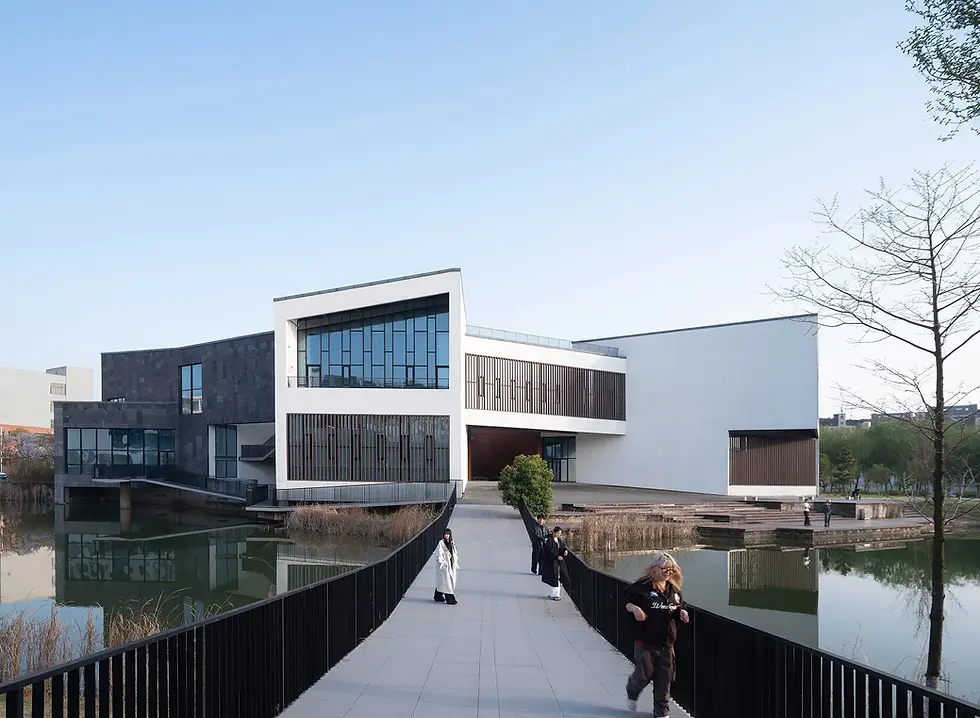
TJAD and DCA completed this 9,314-square-meter museum along the lakeshore of the Anhui University of Arts campus in Hefei. A 60-degree tri-directional grid organises galleries, courtyards, stepped circulation, and rooftop routes, while black pitched roofs, white walls, and timber screens form a walkable contemporary interpretation of a Hui-style ‘art village’. The building connects campus circulation, public exhibitions, and the lakeside landscape in a significant recent cultural project.
15
TOM WOOD SHIBUYA(TORAFU ARCHITECTS)
TORAFU ARCHITECTS designed the Tokyo flagship store for Norwegian jewellery brand TOM WOOD. A 7.2-metre central glass showcase organises circulation through the 300-square-meter interior, linking a timber lounge, archive wall, service areas, and a visible jewellery laboratory. The restrained portal facade connects the street with the brand’s material world, allowing browsing, making, and informal rest to overlap within one bright and carefully controlled retail environment.
EVENTS
Design Exhibition
The Nue Black Aesthetic

The Nue Black Aesthetic is a major forthcoming exhibition at London’s Design Museum exploring how contemporary Black designers are reshaping global design culture. Spanning furniture, architecture, fashion, product design, and sculpture, the show presents more than 100 works about identity, culture, community, and material practice.
Design Festival
Helsinki Design Week 2026

Helsinki Design Week 2026 will take place across Helsinki and online under the theme “The Oncoming Other.” As one of the Nordic region’s largest design and architecture festivals, it brings design into everyday city life through exhibitions, open studios, markets, forums, Children’s Design Week, and public programs.
Design Award
2026 AIA International Design Awards

The 2026 AIA International Design Awards invite architects and design practices worldwide to submit international projects in architecture, interior architecture, unbuilt work, urban design, firm practice, sustainable futures, and inclusive design. The program highlights design for people and planet on an international professional platform.
Design Competition
International Furniture Design Competition Asahikawa 2027 (IFDA 2027)

The International Furniture Design Competition Asahikawa (IFDA) 2027 invites designers worldwide to submit previously unpublished wooden furniture. Under the theme “Origin,” entrants are asked to return to the relationship between furniture, materials, craft, technology, and everyday life.
Design Award
KOKUYO DESIGN AWARD 2027

KOKUYO DESIGN AWARD 2027 invites designers worldwide to submit stationery, furniture, and tools for work, learning, and everyday life under the theme “dialogue.” Entrants are encouraged to explore reciprocal relationships between people, objects, and their environments while proposing concepts with social relevance and product potential.
Mata do Paraíso Scout Park
Plano Humano Arquitectos
355 m²
Vialonga, Portugal

航拍视角显示三座体量集中于较平缓地带,为周围松林与活动空地保留连续空间。 An aerial view shows the three volumes gathered on gentler ground, preserving continuous woodland and activity clearings around them. © João Morgado

松林边缘的三座服务建筑以连续木柱和起伏屋面组成低矮的营地界面。 Three low service buildings form a restrained campsite edge through repeated timber posts and gently curving roofs. © João Morgado

清洗设施平面图显示连续工作台与开放木构边界的组织方式。 The washing-facility plan shows the continuous work counter within an open timber perimeter. © Plano Humano Arquitectos
航拍视角显示三座体量集中于较平缓地带,为周围松林与活动空地保留连续空间。 An aerial view shows the three volumes gathered on gentler ground, preserving continuous woodland and activity clearings around them. © João Morgado
HOTEL THE MADO
Furuya Design Architect Office
794.99 m²
Isumi, Japan

泳池边的通高玻璃和混凝土柱廊,连接酒店立面与面海的室外平台。 Full-height glazing and a concrete colonnade meet the pool and seaward terrace. © Yasuhiro Nakayama

从庭院看酒店外立面,连续柱列将首层通道与上层客房收束为清晰的水平界面。 From the garden, a continuous row of columns unites the ground-floor passage and upper rooms. © Yasuhiro Nakayama

暮色里,酒店的玻璃界面亮起,混凝土框架在山坡与海之间保持清晰轮廓。 At dusk, lit glazing reveals the concrete frame against the coastal hillside. © Yasuhiro Nakayama
泳池边的通高玻璃和混凝土柱廊,连接酒店立面与面海的室外平台。 Full-height glazing and a concrete colonnade meet the pool and seaward terrace. © Yasuhiro Nakayama
Gisors Cultural Hub
richter architectes et associés
2650 m²
Gisors, France

文化中心沿埃普特河岸低伏展开,媒体图书馆、影院与连续长廊共同围合新的滨水公共界面。 The cultural hub extends low along the River Epte, bringing the media library, cinema and continuous gallery into one civic waterfront. © Luc Boegly

从滨河公园远望,浅色体量与长廊顺着河道延伸,原停车场被重新交还给树木、步行和停留。 Seen across the riverside park, the pale volumes and gallery follow the water where surface parking once occupied the ground. © Luc Boegly

媒体图书馆剖面显示下沉阅读区、上层阅览空间、长廊与河岸景观之间的高差联系。 The media-library section shows the level changes between sunken reading area, upper floor, gallery and river landscape. © richter architectes et associés
文化中心沿埃普特河岸低伏展开,媒体图书馆、影院与连续长廊共同围合新的滨水公共界面。 The cultural hub extends low along the River Epte, bringing the media library, cinema and continuous gallery into one civic waterfront. © Luc Boegly
Media Library and Music School
Dominique Coulon & Associés
2173 m²
Sarlat-la-Canéda, France

媒体图书馆与音乐学校沿旧石墙展开,赭色新馆、历史宅邸和街道共同构成文化综合体的整体界面。 The media library and music school extend along the retained stone wall, bringing the ochre new building, historic residence and street into one civic frontage. © Eugeni Pons

从老城街巷望向项目,低伏的赭色体量在两侧历史石建筑之间收住视线。 Seen from the old-town street, the low ochre volume closes the view between historic stone buildings. © Eugeni Pons

媒体图书馆与音乐学校沿旧石墙展开,赭色新馆、历史宅邸和街道共同构成文化综合体的整体界面。 The media library and music school extend along the retained stone wall, bringing the ochre new building, historic residence and street into one civic frontage. © Eugeni Pons
Livraria da Vila Artes
ARCHITECTS OFFICE
40 m²
São Paulo, Brazil
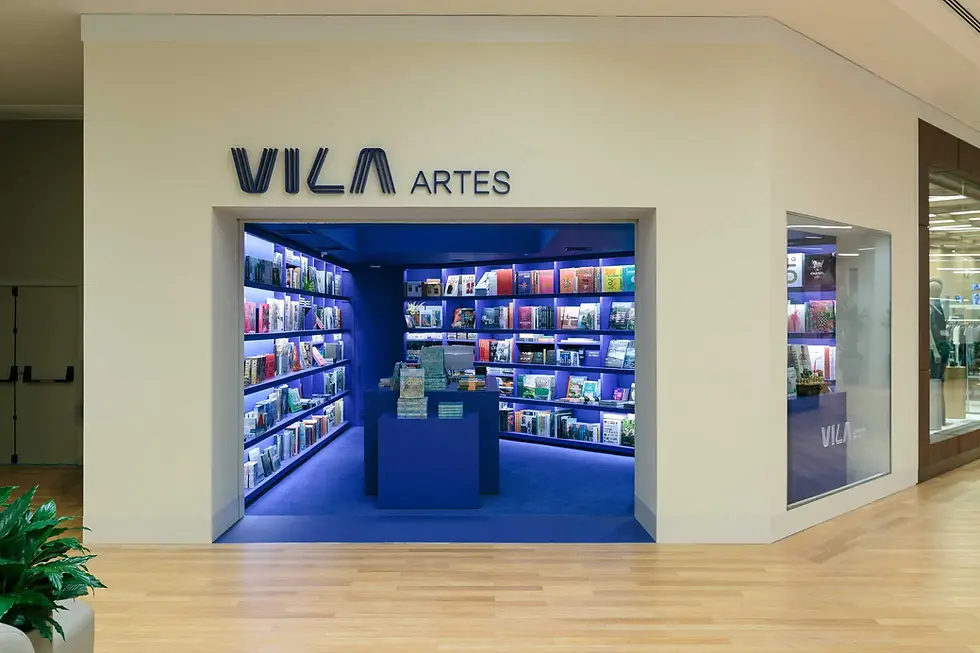
米白色店面从商场木地板旁切出深蓝入口,书架与中央展台在门框中形成完整的第一眼。 An off-white storefront cuts a deep-blue opening beside the mall's timber floor, framing shelves and the central display in a single first view. © Felco

转角视角同时呈现入口与侧窗,克制的外壳将内部高饱和度蓝色留在两个开口之中。 The corner view brings entrance and side window together, with the restrained outer shell containing saturated blue within two precise openings. © Felco

平面图显示楔形店铺边界、沿墙书架、中央展台、收银区与两个面向商场的开口。 The floor plan maps the wedge-shaped boundary, perimeter shelving, central display, cashier and two openings toward the mall. © ARCHITECTS OFFICE
米白色店面从商场木地板旁切出深蓝入口,书架与中央展台在门框中形成完整的第一眼。 An off-white storefront cuts a deep-blue opening beside the mall's timber floor, framing shelves and the central display in a single first view. © Felco
L’ARIA Restaurant
Herzog & de Meuron
730 m²
Blevio, Como, Italy

从湖畔高处远望,餐厅与温室贴近Villa Roccabruna花园边缘,科莫湖和山体构成项目最重要的环境背景。 From above the lakeshore, restaurant and greenhouse sit at the edge of Villa Roccabruna’s gardens against Lake Como and the surrounding mountains. © Robert Rieger

从酒店花园望向L’ARIA,原建筑向外延伸的带顶游廊把室内餐厅、上层露台与植被连成连续立面。 Seen from the hotel garden, L’ARIA’s covered veranda draws dining room, upper terrace and planting into one continuous elevation. © Robert Rieger

横剖面图标示上层露台、游廊与地下层的垂直叠合,并说明扩建体量在花园中的低矮尺度。 The cross section aligns upper terrace, veranda and lower level, clarifying the extension’s low profile within the garden. © Herzog & de Meuron
从湖畔高处远望,餐厅与温室贴近Villa Roccabruna花园边缘,科莫湖和山体构成项目最重要的环境背景。 From above the lakeshore, restaurant and greenhouse sit at the edge of Villa Roccabruna’s gardens against Lake Como and the surrounding mountains. © Robert Rieger
Arte Abierto Baja
Sordo Madaleno Arquitectos
180 m²
Cabo San Lucas, Mexico

入口坡道从Ánima Village的花园缓缓下沉,低矮混凝土屋面把展厅隐藏在海岸景观之下。 The entrance ramp descends gently from the gardens of Ánima Village, while a low concrete roof conceals the gallery beneath the coastal landscape. © Ariadna Polo

俯瞰方形露天展厅,高墙围合艺术装置,中央完整天空成为空间的第五个界面。 An aerial view reveals the square open-air gallery, where high walls frame the installation and the sky forms a fifth surface. © Pablo Manjarrez

剖面图标示展厅位于地面以下4 m,超过5 m高的围墙与坡道共同建立由压缩到开敞的空间序列。 The section marks the gallery four metres below grade, with walls over five metres high and the ramp shaping a sequence from compression to openness. © Sordo Madaleno Arquitectos
入口坡道从Ánima Village的花园缓缓下沉,低矮混凝土屋面把展厅隐藏在海岸景观之下。 The entrance ramp descends gently from the gardens of Ánima Village, while a low concrete roof conceals the gallery beneath the coastal landscape. © Ariadna Polo
NUBIAN FUKUOKA
TORAFU ARCHITECTS
860 m²
Fukuoka, Japan

从街道正面观察旗舰店所在建筑,通透首层与二层铝框陈列共同向大名街区显露室内活动。 A wide street view reveals the transparent ground floor and the aluminium display framework above, opening the flagship store toward Daimyo. © Daici Ano

暮色中的入口立面以克制的灯光呈现NUBIAN标识,玻璃界面把一层暗色空间与街道连接起来。 At dusk, restrained lighting and the NUBIAN sign mark the entrance, while glazing connects the darker ground-floor interior to the street. © Daici Ano

三层平面图记录库存与员工空间,补充旗舰店销售区域之外的后勤组织。 The third-floor plan records stock and staff areas, completing the operational organisation beyond the retail floors. © TORAFU ARCHITECTS
从街道正面观察旗舰店所在建筑,通透首层与二层铝框陈列共同向大名街区显露室内活动。 A wide street view reveals the transparent ground floor and the aluminium display framework above, opening the flagship store toward Daimyo. © Daici Ano
B Nesta Residence
UOS Architecture Studio
2400 m²
Kerobokan, Indonesia

从街道正面看B Nesta,连续红砖格栅构成沉稳基座,白色与赤陶色体量从其上方错落升起。 Seen directly from the street, B Nesta rises above a continuous red-brick screen in staggered white and terracotta volumes. © Indra Wiras

沿街斜望B Nesta,长向立面由阳台、深窗框与种植槽分解成富有层次的居住界面。 An oblique street view shows balconies, deep window frames and planted edges breaking down the long residential facade. © Indra Wiras

整体轴测图汇总建筑体量、庭院、水面与屋顶之间的空间层次。 The overall axonometric brings together the building volumes, courtyards, water and rooftop levels. © UOS Architecture Studio
从街道正面看B Nesta,连续红砖格栅构成沉稳基座,白色与赤陶色体量从其上方错落升起。 Seen directly from the street, B Nesta rises above a continuous red-brick screen in staggered white and terracotta volumes. © Indra Wiras
House for Camping
Patchwork Architecture
110 m²
Awaroa, New Zealand

鸟瞰显示连续金属屋面围合中央庭院,住宅落在成熟森林中的既有空地上。 An aerial view shows the continuous metal roof enclosing the central courtyard within an existing forest clearing. Courtesy of Patchwork Architecture

从海岸方向俯瞰林地与住宅,项目位于亚伯塔斯曼国家公园边界的森林深处。 Seen from the coast, the house sits deep within the forest at the boundary of Abel Tasman National Park. Courtesy of Patchwork Architecture

庭院火光与室内暖光并置,开放中心成为森林夜晚中的家庭聚点。 Firelight and the warm interior meet in the courtyard, turning the open centre into a family gathering place after dark. Courtesy of Patchwork Architecture
鸟瞰显示连续金属屋面围合中央庭院,住宅落在成熟森林中的既有空地上。 An aerial view shows the continuous metal roof enclosing the central courtyard within an existing forest clearing. Courtesy of Patchwork Architecture
Common Days Cafe
INS Studio
269 m²
Maros, Indonesia

正面外观显示三层体量与陶砖格栅的整体关系,首层咖啡入口嵌在较为厚重的基座之中。 The frontal exterior shows the three-storey volume and its terracotta screen, with the cafe entrance set into a more solid ground-floor base. © Akasa Rana

从街道斜向观看,陶砖格栅沿二层与屋顶展开,并以不同高度回应建筑内部的露台和花园。 Seen obliquely from the street, the terracotta grid rises across the upper levels, its changing height corresponding to terraces and the rooftop garden. © Akasa Rana

横向剖面显示砖格立面如何遮挡早晨直射光,并将自然通风引入工作区与屋顶空间。 The cross-section shows how the perforated facade filters morning sun and draws natural ventilation through the coworking and rooftop levels. © INS Studio
正面外观显示三层体量与陶砖格栅的整体关系,首层咖啡入口嵌在较为厚重的基座之中。 The frontal exterior shows the three-storey volume and its terracotta screen, with the cafe entrance set into a more solid ground-floor base. © Akasa Rana
THE CONE
KAMIYA ARCHITECTS
380.41 m²
Karuizawa, Nagano, Japan
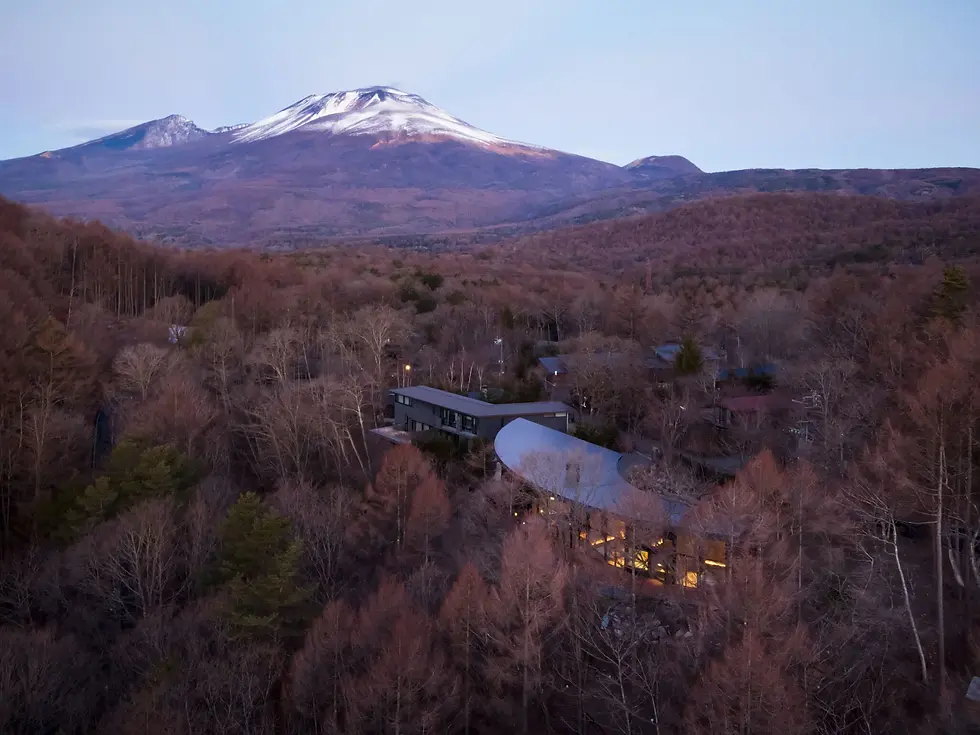
从东南侧俯瞰,逆圆锥屋顶沿森林边缘展开,弧形体量顺应场地的扇形平地。 From the southeast, the inverted-conical roof follows the forest edge and the fan-shaped plateau. © Takumi Ota
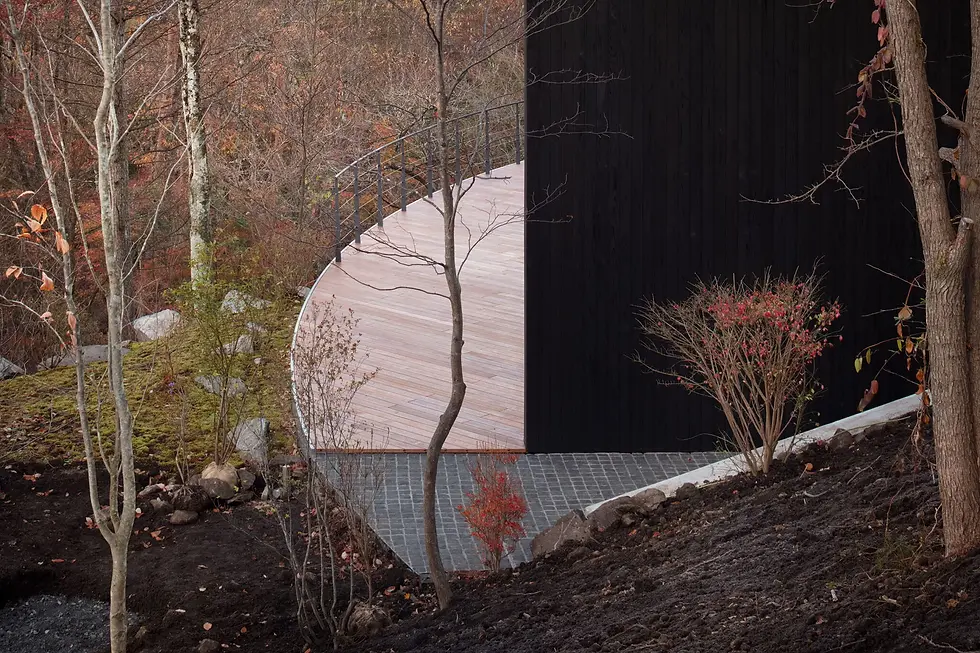
从东北侧看向露台,屋面向森林抬升,在室内外之间形成宽阔边界。 From the northeast, the roof rises toward the forest and shelters a broad threshold around the terrace. © Takumi Ota
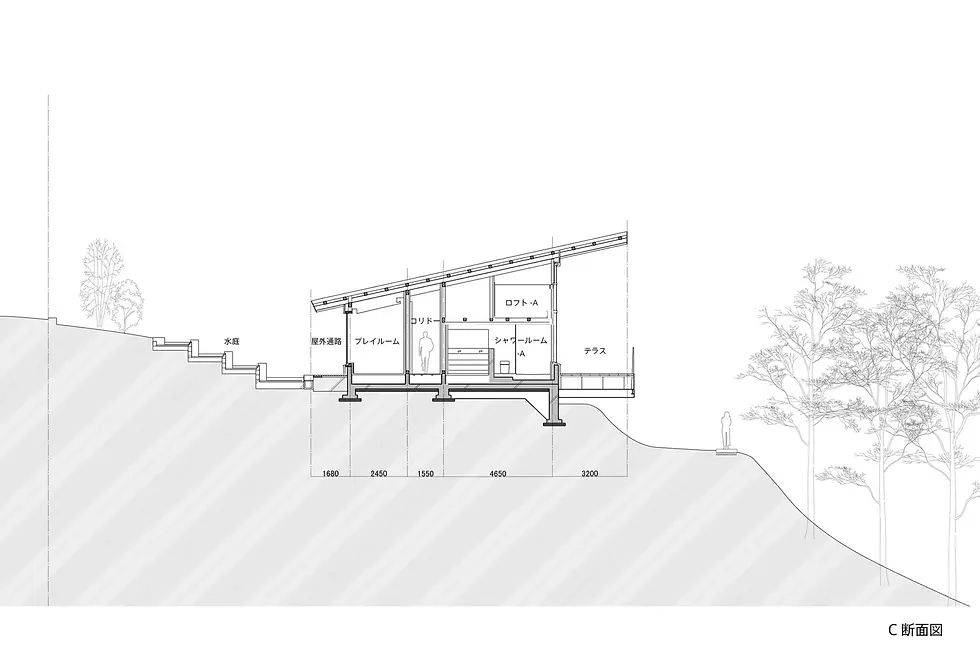
剖面图说明单坡断面如何沿圆弧旋转,并形成面向森林的逆圆锥屋顶。 The section explains how a mono-pitched profile rotates along the arc to form the inverted-conical roof. © KAMIYA ARCHITECTS
从东南侧俯瞰,逆圆锥屋顶沿森林边缘展开,弧形体量顺应场地的扇形平地。 From the southeast, the inverted-conical roof follows the forest edge and the fan-shaped plateau. © Takumi Ota
La Vigilia Winery
González Olsina & Vega Arquitectos
1700 m²
Los Chacayes, Argentina

从入口路径望向酒庄主体,层层铺开的庭院与低矮体量把建筑置于葡萄园和安第斯山景之间。 From the arrival path, the winery is framed by layered courts, low volumes, vineyards and the Andes beyond. © Luis Abba

从高处俯瞰酒庄、葡萄园与道路,建筑成为大片种植地中的一处深色节点。 Seen from above, the winery, vineyards and road form a dark architectural node within the broader cultivated landscape. © Luis Abba

细部设计图以剖切和局部构造呈现入口、墙体与室内空间的连接。 A detail drawing uses section and local construction to show the connection between entrance, walls and interior space. © González Olsina & Vega Arquitectos
从入口路径望向酒庄主体,层层铺开的庭院与低矮体量把建筑置于葡萄园和安第斯山景之间。 From the arrival path, the winery is framed by layered courts, low volumes, vineyards and the Andes beyond. © Luis Abba
Centre Pompidou Hanwha Seoul
Wilmotte & Associés
12000 m²
Seoul, South Korea

从汉江一侧观看63大厦基座,横向展开的白色美术馆以低矮“光之带”回应塔楼的垂直尺度。 Seen from the Han River side, the low white museum forms a horizontal band of light beneath the vertical mass of the 63 Building. © Wilmotte & Associés SA

从城市街角远望,美术馆的半透明体量嵌入高层建筑之间,树木与退台缓和了大型裙房的边界。 From a city corner, the translucent museum sits among taller buildings, with trees and setbacks softening the edge of the large podium. © Wilmotte & Associés SA

礼堂采用深色座席与均匀线性照明,为讲座、放映和公共项目提供相对独立的活动空间。 The auditorium combines dark seating with even linear lighting, providing a focused setting for talks, screenings and public programmes. © 2026 Hanwha Foundation of Culture
从汉江一侧观看63大厦基座,横向展开的白色美术馆以低矮“光之带”回应塔楼的垂直尺度。 Seen from the Han River side, the low white museum forms a horizontal band of light beneath the vertical mass of the 63 Building. © Wilmotte & Associés SA
La Source Vive
PCA-STREAM
2150 m²
Évian-les-Bains, France

新旧两座音乐厅在森林中并置,低矮木玻璃门厅连接La Source Vive的铜质壳体与La Grange au Lac。 The two halls sit together in the woodland, joined by a low timber-and-glass foyer between La Source Vive’s copper shell and La Grange au Lac. © Salem Mostefaoui for PCA-STREAM

透过树干望向共享门厅,连续玻璃界面把园区步道、室内灯光与两座演出空间联系起来。 Seen through the trees, the shared glazed foyer links the woodland path, interior activity and both performance halls. © Salem Mostefaoui for PCA-STREAM

横剖面解释阶梯座席、混凝土声学内壳、木结构外壳与顶部天窗之间的多层构造。 The transverse section explains the layered relationship between tiered seating, concrete acoustic shell, timber outer structure and oculus. © PCA-STREAM
新旧两座音乐厅在森林中并置,低矮木玻璃门厅连接La Source Vive的铜质壳体与La Grange au Lac。 The two halls sit together in the woodland, joined by a low timber-and-glass foyer between La Source Vive’s copper shell and La Grange au Lac. © Salem Mostefaoui for PCA-STREAM
The Orb House
Chiasmus Partners
198 m²
Yongin-si, South Korea
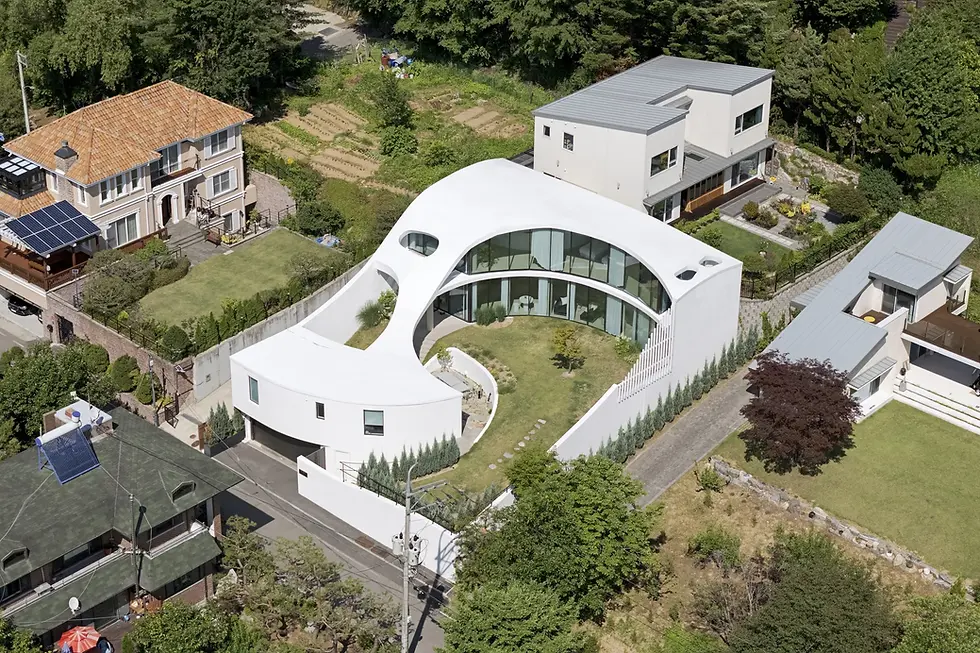


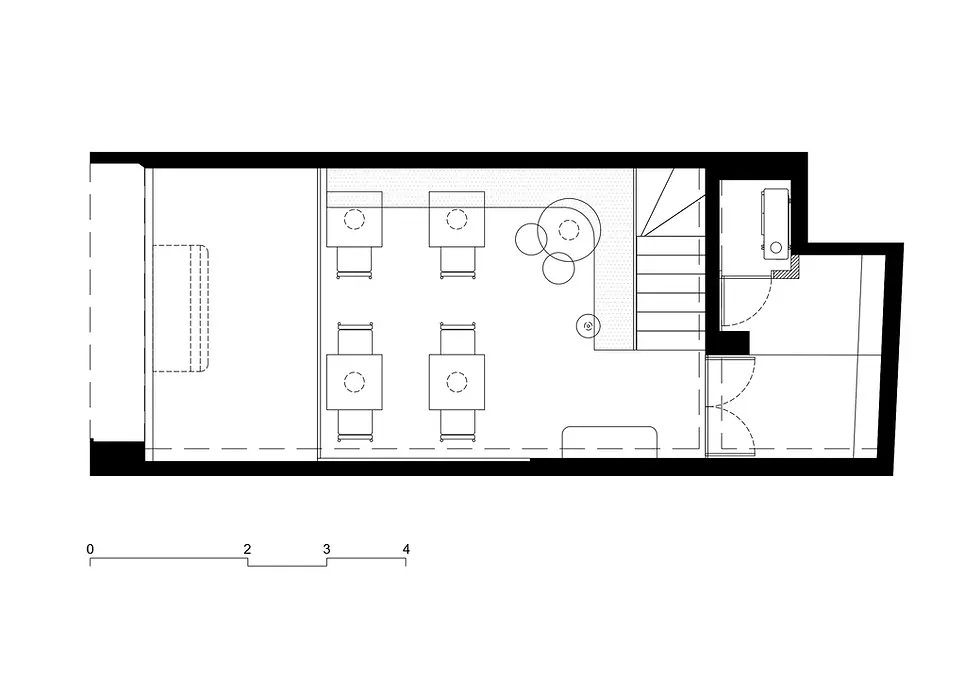
Sanduteca – Sandwich Library
Estúdio Cajalima
60 m²
São Paulo, Brazil


House in Nikko
Atelier MEME
145.75 m²
Nikko, Japan


JNG House
BodinChapa Architects
446 m²
Bangkok, Thailand

住宅以独立车棚作为街道界面,白色两层体量在低矮围墙和金属门之间形成克制而清晰的整体外观。 A detached carport defines the street edge, while the restrained white two-storey volume rises behind a low wall and metal gate. © Witsawarut Kekina

从街道近看入口一侧,圆润转角、深檐与抬高台阶共同引导访客从车棚转入住宅内部。 At close range, rounded corners, deep eaves and raised steps guide movement from the carport into the house. © Witsawarut Kekina

二层平面图呈现私密房间围绕庭院布置的方式,并标明楼梯、通高空间与下层公共区域的联系。 The second-floor plan shows private rooms arranged around the courtyard and their relationship to the stair, void and shared spaces below. © BodinChapa Architects
住宅以独立车棚作为街道界面,白色两层体量在低矮围墙和金属门之间形成克制而清晰的整体外观。 A detached carport defines the street edge, while the restrained white two-storey volume rises behind a low wall and metal gate. © Witsawarut Kekina
EcoNeo Summerhouse
SAGA Space Architects
35 m²
Asnæs, Denmark


TOM WOOD SHIBUYA
TORAFU ARCHITECTS
300 m²
Tokyo, Japan


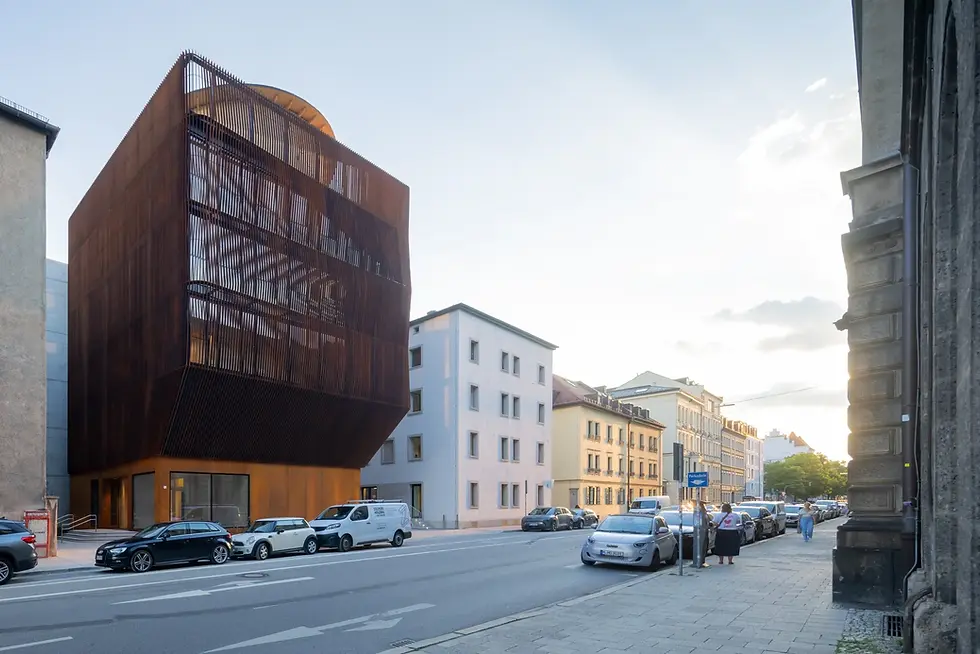
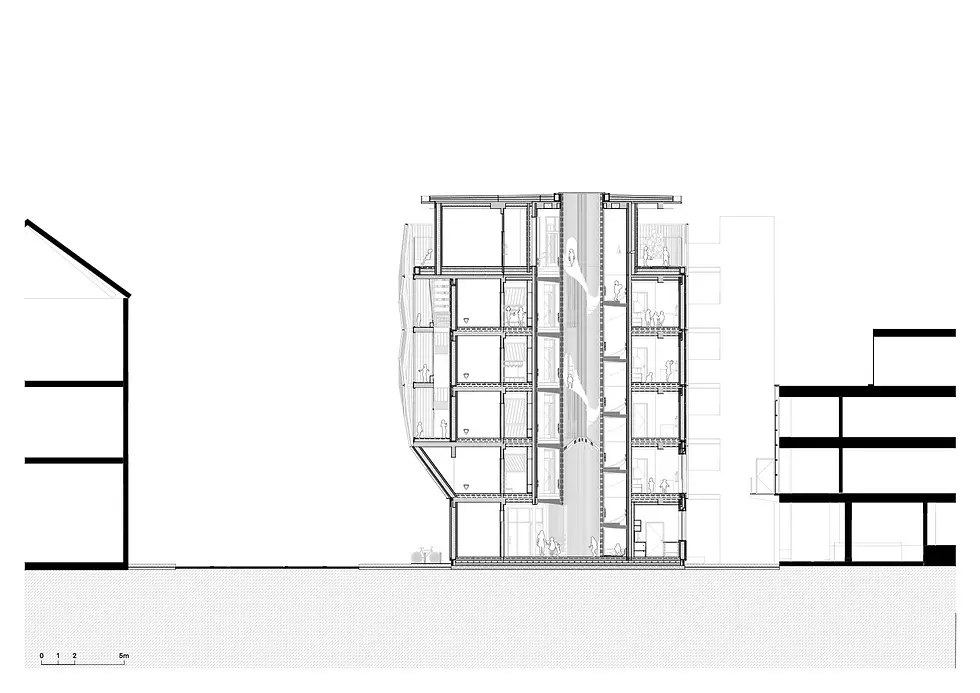
TU Munich Kinderoase Daycare
Kéré Architecture + HK Architekten
1540 m²
Munich, Germany

Terra Catarina House
Nola Arquitetura
600 ㎡
Campo Alegre, Brazil


Kawara no Garan
ninkipen! + MuFF
275.29 m²
Osaka, Japan

鸟瞰展示新旧屋舍与庭院的整体关系。 An aerial view maps the old and new buildings around the garden. © Hiroki Kawata

从东南侧俯看层叠瓦屋顶。 Overlapping tiled roofs seen from the southeast. © Hiroki Kawata

平面图呈现新住宅与既有宅院的围合关系。 The plan records the new home within the existing estate. © ninkipen! + MuFF
鸟瞰展示新旧屋舍与庭院的整体关系。 An aerial view maps the old and new buildings around the garden. © Hiroki Kawata
Red Submarine Cabin
Wiki World
20 m²
Wuhan, China

正立面以大幅玻璃与圆窗并置,呈现红色外壳的两种取景方式。 A picture window and porthole share the red front elevation, framing the forest at two scales. © Xhot
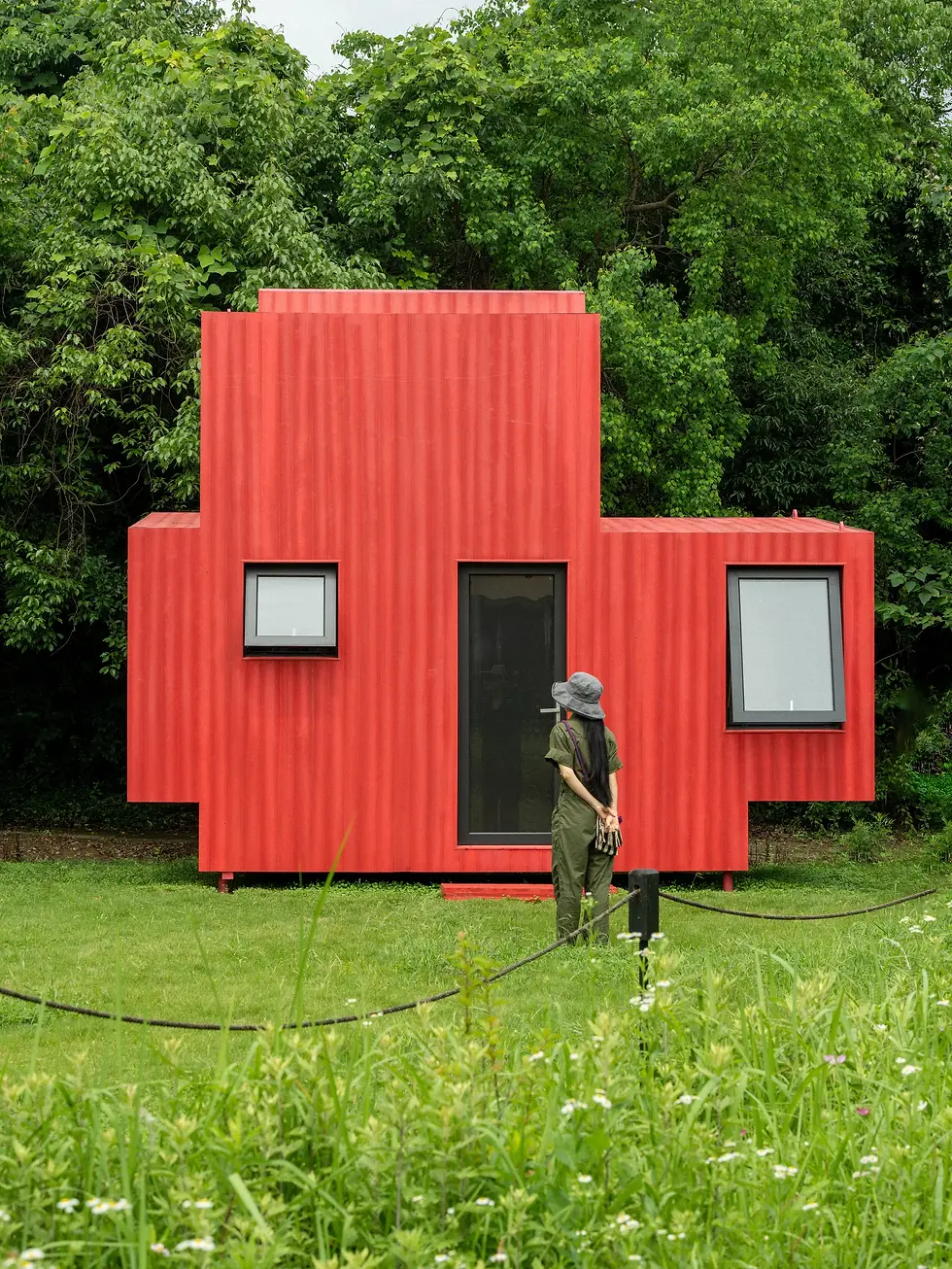
从草地看侧立面,架空的小屋轻轻离开地面。 From the lawn, the raised side elevation shows how the cabin meets the ground. © Xhot

另一幅场地插画展示小屋与周围林地的关系。 A second site illustration shows the cabin within its woodland setting. © Wiki World
正立面以大幅玻璃与圆窗并置,呈现红色外壳的两种取景方式。 A picture window and porthole share the red front elevation, framing the forest at two scales. © Xhot
Restaurant Frohberg
Peter Moor Architects
344 m²
Stäfa, Switzerland

从道路一侧望向餐厅,灰色山墙与连续木柱共同构成面向葡萄园的完整轮廓。 Seen from the approach road, the grey gable and continuous timber posts establish the restaurant's full profile above the vineyard. © Roger Frei

入口位于两组坡屋顶体量的交接处,木质门廊把日常餐厅与宴会厅连成一体。 The entrance sits where the two pitched-roof volumes meet, with a timber threshold joining the dining room and banquet hall. © Roger Frei
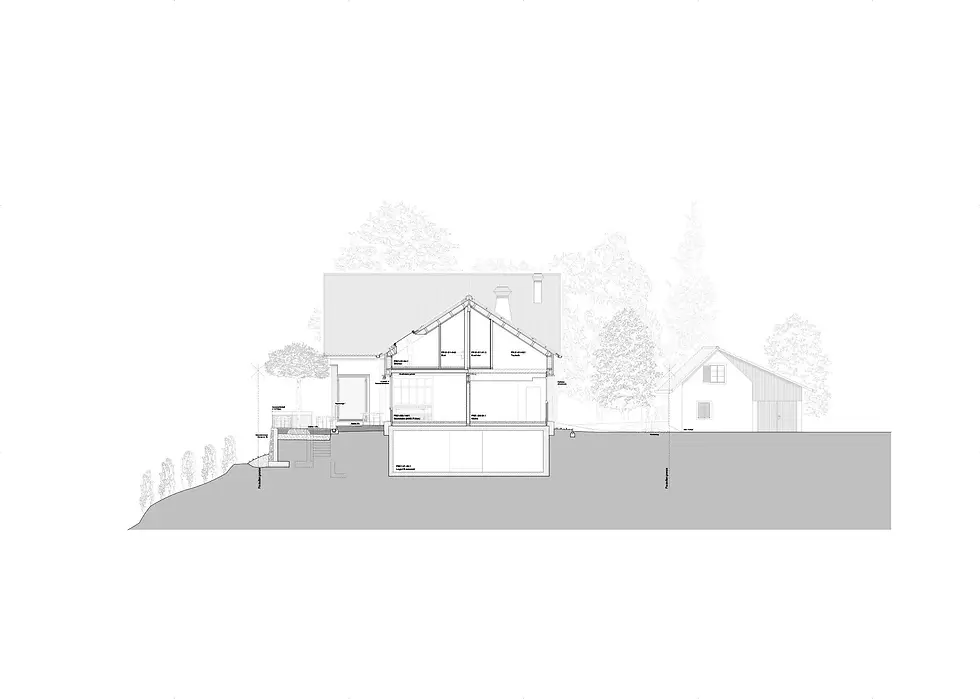
横剖面图穿过宴会厅及地下空间,显示木构屋顶、厚重墙体和葡萄园坡面的关系。 The cross section cuts through the banquet hall and basement, relating the timber roof, weighty walls and vineyard slope. © Peter Moor
从道路一侧望向餐厅,灰色山墙与连续木柱共同构成面向葡萄园的完整轮廓。 Seen from the approach road, the grey gable and continuous timber posts establish the restaurant's full profile above the vineyard. © Roger Frei
Tullie Museum
De Matos Ryan
3776 m²
Carlisle, United Kingdom

沿Castle Street看图利博物馆,历史门楼、沿街排屋与新入口共同形成连续城市界面。 Along Castle Street, the historic gatehouse, terraced buildings and renewed entrance form a continuous civic frontage. © Hufton + Crow

日光下的博物馆沿街立面呈现不同年代建筑并置的层次。 In daylight, the museum frontage reveals the layered presence of buildings from different periods. © Hufton + Crow

首层平面图呈现新入口、欢迎空间、商店与展厅的连续到访路径。 The ground-floor plan traces a continuous route through the entrance, welcome space, shop and galleries. © De Matos Ryan
沿Castle Street看图利博物馆,历史门楼、沿街排屋与新入口共同形成连续城市界面。 Along Castle Street, the historic gatehouse, terraced buildings and renewed entrance form a continuous civic frontage. © Hufton + Crow
Pizza 4P's Thao Dien
studio anettai
560.8 m²
Ho Chi Minh City, Vietnam

从西侧街道望向餐厅入口,黑色网门、旧砖基座与庭院植物把原别墅的边界转化为可透视的到达界面。 From the western street, mesh gates, an existing brick base and garden planting turn the villa boundary into a permeable entrance. © 大木裕之

食用农园占据场地中心,植物、砖砌种植池与茅草棚共同构成餐厅最开敞的公共景观。 The edible garden occupies the heart of the site, where planting, brick beds and thatched shade form the restaurant's most open shared landscape. © 大木裕之

横剖面显示旧别墅房间、楼梯和新增遮荫结构如何共同调节高度、光线与通风。 The cross section shows how existing rooms, stair and new shade structures work together to modulate height, light and ventilation. © studio anettai
从西侧街道望向餐厅入口,黑色网门、旧砖基座与庭院植物把原别墅的边界转化为可透视的到达界面。 From the western street, mesh gates, an existing brick base and garden planting turn the villa boundary into a permeable entrance. © 大木裕之
BERTH COFFEE Minatomirai
HAGISO
145.73 m²
Yokohama, Japan

从上层俯瞰BERTH COFFEE港未来店,店铺入口与共用露台被连续的浮岛座席连接为一个整体。 An elevated overview shows the cafe entrance and shared terrace joined by the continuous seating island. © 堀越圭晋 / SS / © Keishin Horikoshi / SS

从共用露台望向店铺,低矮座席跨越原有边界,使公共通道自然延伸至咖啡馆。 Looking from the shared terrace toward the cafe, low seating carries the public route across the original tenancy line. © 堀越圭晋 / SS / © Keishin Horikoshi / SS

剖面图显示370 mm高浮岛座席、厨房设备与悬浮天花在垂直方向上的对应关系。 The section aligns the 370 mm-high seating island with kitchen equipment and floating ceiling volumes above. © HAGISO / © HAGISO
从上层俯瞰BERTH COFFEE港未来店,店铺入口与共用露台被连续的浮岛座席连接为一个整体。 An elevated overview shows the cafe entrance and shared terrace joined by the continuous seating island. © 堀越圭晋 / SS / © Keishin Horikoshi / SS
private villa ten -KUMANO-
Horibe Associates
199.08 m²
Hannan, Japan

从北侧道路仰望别墅,深色山形屋顶抬离石砌边坡,混凝土基座在树木之间托起主要生活层。 Seen from the northern road, the dark gabled roof rises above the stone slope while a concrete base lifts the main living level among the trees. © 三木夕渚 / Yunagi Miki

从场地东北侧看,RC基座与木构上层清晰分层,斜屋顶和深檐将建筑的方向指向远处景观。 From the north-east, the reinforced-concrete base and timber upper floor read as distinct layers, with the pitched roof and deep eaves directing the house toward the distant view. © 三木夕渚 / Yunagi Miki

剖面图呈现架空首层、上层木构空间与斜屋顶的关系,并说明不同地坪标高如何回应景观。 The sections show the pilotis, timber upper floor and pitched roof, clarifying how changing floor levels answer the landscape. © Horibe Associates
从北侧道路仰望别墅,深色山形屋顶抬离石砌边坡,混凝土基座在树木之间托起主要生活层。 Seen from the northern road, the dark gabled roof rises above the stone slope while a concrete base lifts the main living level among the trees. © 三木夕渚 / Yunagi Miki
Glimpsing House
and to Architects
321.9 m²
Tokyo, Japan

东侧道路所见的整体外观,竹模板混凝土、大和贴木墙与层叠绿植共同形成面向街道的深度。 The overall street elevation combines bamboo-board concrete, Yamato timber cladding and layered planting to create depth along the eastern edge. © Koji Fujii / TOREAL

鸟瞰住宅与东京密集街区,U形体量围绕北庭展开,并在连续屋顶之间保留光与风的通道。 An aerial view places the U-shaped house within its dense Tokyo neighbourhood, with the northern garden and separated roof planes preserving routes for light and air. © Koji Fujii / TOREAL

剖面透视呈现从地下层至二层的多重楼板、2350至7050 mm的高度变化,以及架空“露庭室”与北庭的关系。 The sectional perspective reveals the layered floors from basement to second level, the 2350-to-7050 mm height shift, and the relationship between the lifted Roji Room and northern garden. © and to Architects
东侧道路所见的整体外观,竹模板混凝土、大和贴木墙与层叠绿植共同形成面向街道的深度。 The overall street elevation combines bamboo-board concrete, Yamato timber cladding and layered planting to create depth along the eastern edge. © Koji Fujii / TOREAL
Colere 1600 by Cloud 7 Hotels
P2A Design
2800 m²
Colere, Italy

从坡地远望Colere 1600,酒店嵌在林木、岩壁与滑雪设施交汇的山地环境中。 A distant view places Colere 1600 where forest, rock and ski infrastructure meet in the Alpine landscape. © Francesca Iovene
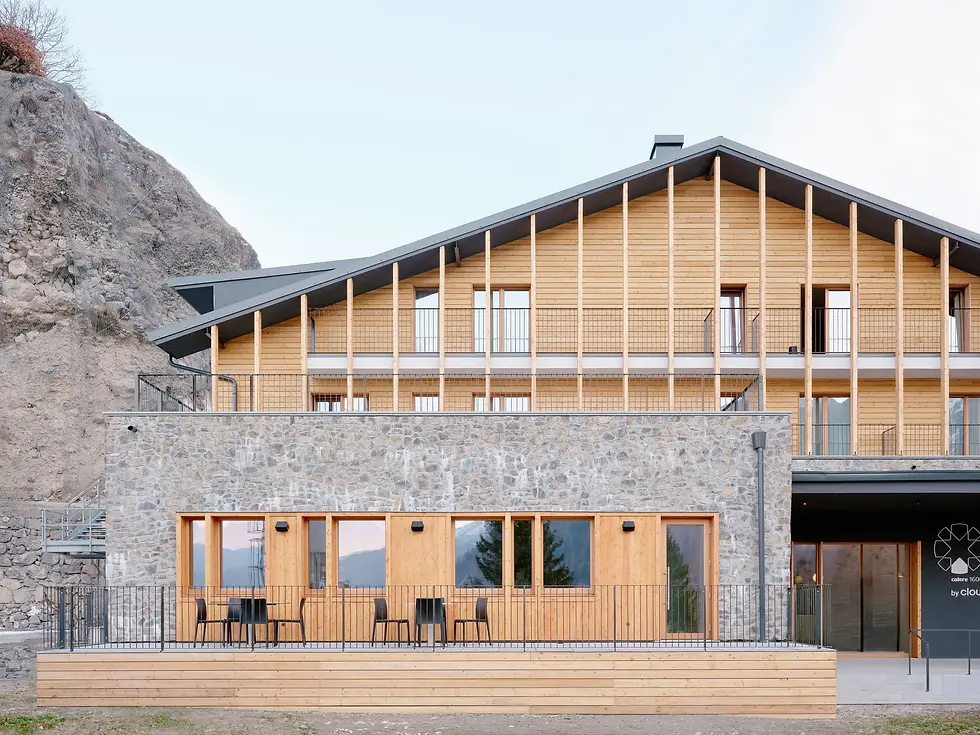
主入口一侧以奥罗比山石构成坚实基座,上层木构坡屋顶保留清晰的山地建筑轮廓。 Orobie stone forms a robust entrance base beneath the timber upper floors and legible pitched-roof profile. © Francesca Iovene

木柱与竖向遮阳构件在露台边缘形成深浅变化,细化玻璃立面与山地气候之间的界面。 Timber posts and vertical screens add depth along the terrace, mediating between the glazed facade and mountain climate. © Francesca Iovene
从坡地远望Colere 1600,酒店嵌在林木、岩壁与滑雪设施交汇的山地环境中。 A distant view places Colere 1600 where forest, rock and ski infrastructure meet in the Alpine landscape. © Francesca Iovene
Itsumo Dessert Shop
Kousou
300 m²
Batam City, Indonesia

从南侧街道看Itsumo甜品店,纯白立面在连续店屋和傍晚车流之间只保留入口与发光标志。 Seen from the southern street at dusk, the white facade keeps only a recessed entrance and luminous emblem visible among the continuous shop-houses. © Kung Photograph

傍晚从街道靠近入口,低矮挑檐、混凝土台阶与玻璃门把明亮街景逐步收进室内。 Approaching at dusk, a low canopy, concrete steps and glazed door compress the transition from the bright street into the shop. © Kung Photograph

剖面与材料研究并列呈现空间高度、楼梯、天窗及灰黑材料层次的组织。 Section and material study bring together spatial height, stair, skylight and the layered grey-black palette. © kousou
从南侧街道看Itsumo甜品店,纯白立面在连续店屋和傍晚车流之间只保留入口与发光标志。 Seen from the southern street at dusk, the white facade keeps only a recessed entrance and luminous emblem visible among the continuous shop-houses. © Kung Photograph
GEMMYO Tokyo Boutique
Fumihiko Sano Studio
90 m²
Tokyo, Japan

从场地东侧看精品店所在建筑,深色门面将入口、织物界面与珠宝橱窗并置。 Seen from the east side of the site, the boutique's dark facade brings together its entrance, textile screen and jewellery window. © adhoc / Daisuke Shima

从外部透过开口看西阵织织物,纤细纹理在街道与室内之间形成半透明边界。 Viewed through the facade opening, the Nishijin textile forms a finely textured boundary between street and interior. © adhoc / Daisuke Shima
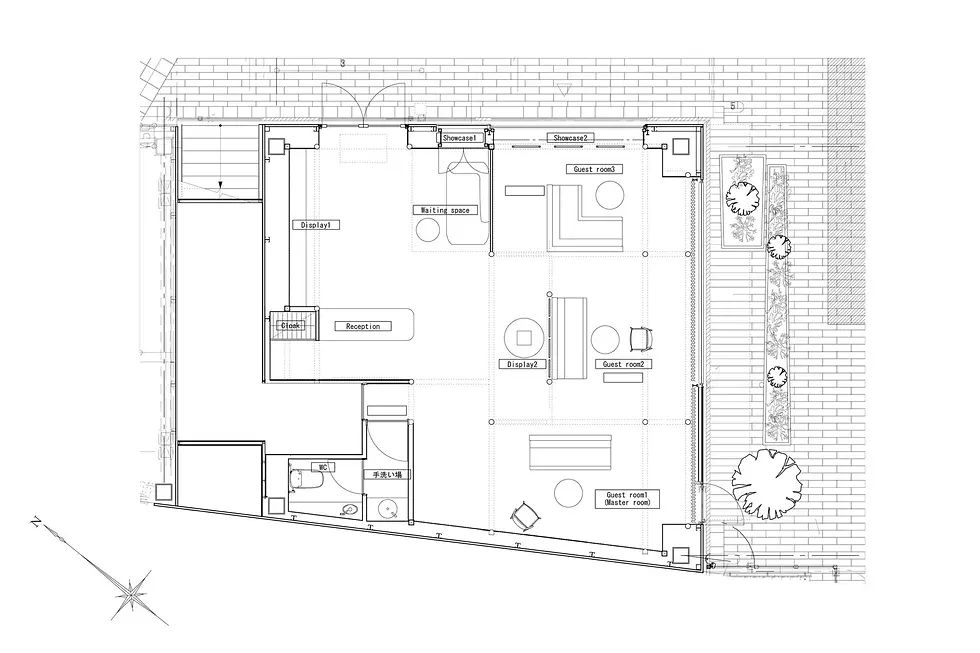
平面图显示入口、接待区、三间贵宾室和侧向庭院如何被自立木构与视觉边界连续组织。 The floor plan shows how entrance, reception, three guest rooms and the side garden are organised by the freestanding timber frame and its visual boundaries. © Fumihiko Sano Studio
从场地东侧看精品店所在建筑,深色门面将入口、织物界面与珠宝橱窗并置。 Seen from the east side of the site, the boutique's dark facade brings together its entrance, textile screen and jewellery window. © adhoc / Daisuke Shima
SHIJI COMMONS
StudioTiltedCircle
321 m²
Zhuhai, China

沿街外观中,旧石、分层混凝土与新构件交织成连续立面,为村落街道建立新的公共界面。 Along the street, old stone, layered concrete and new construction form a continuous façade and a renewed civic edge for the village. © StudioTiltedCircle
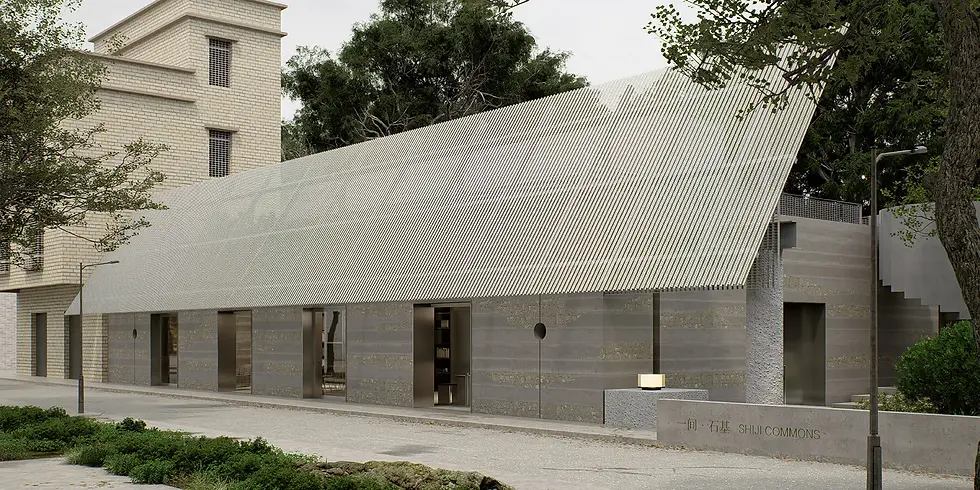
建筑长立面以混凝土墙体和轻质金属屋面并置,在保留石屋尺度的同时显露当代介入。 Concrete walls and a lightweight metal roof define the long façade, retaining the scale of the stone houses while making the contemporary intervention legible. © StudioTiltedCircle

剖面图呈现屋面、线性天窗与中央通道之间的采光关系。 The section traces the relationship between the roofs, linear skylight and daylit central passage. © StudioTiltedCircle
沿街外观中,旧石、分层混凝土与新构件交织成连续立面,为村落街道建立新的公共界面。 Along the street, old stone, layered concrete and new construction form a continuous façade and a renewed civic edge for the village. © StudioTiltedCircle
BIRKENSTOCK SHINSAIBASHI
TORAFU ARCHITECTS
238.14 m²
Osaka, Japan
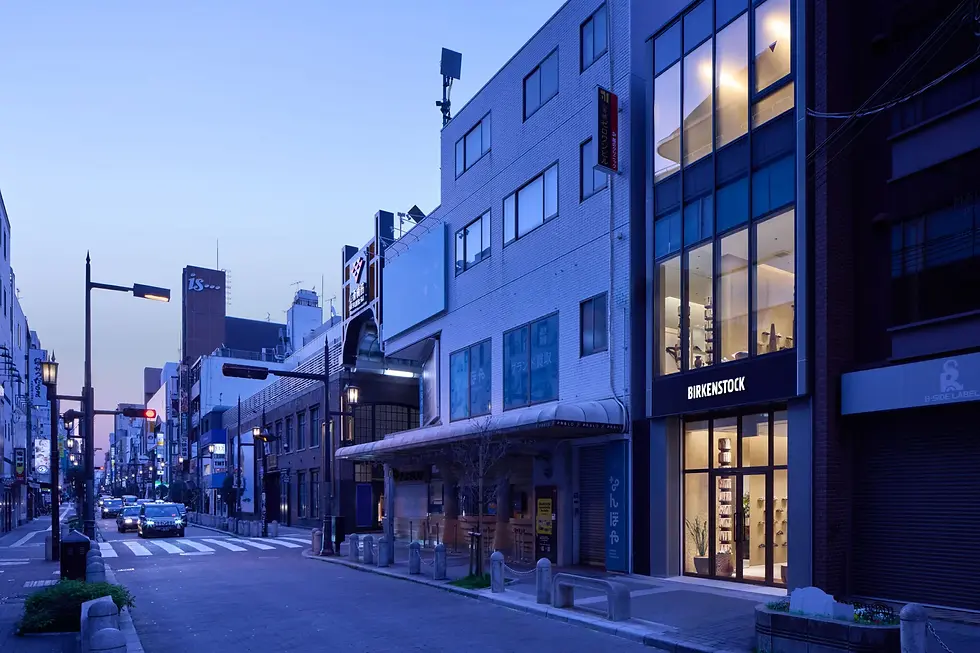
从北侧道路望向店铺,通高玻璃在密集商业街景中展示两层连续的零售空间。 Seen from across the northern street, full-height glazing reveals the two retail floors as a continuous interior within the dense shopping district. © 阿野太一

日间入口贴近人行道展开,通透立面使首层和纸墙与原木作品成为街景的一部分。 The daytime entrance meets the pavement directly, allowing the washi walls and timber works on the ground floor to join the streetscape. © 阿野太一
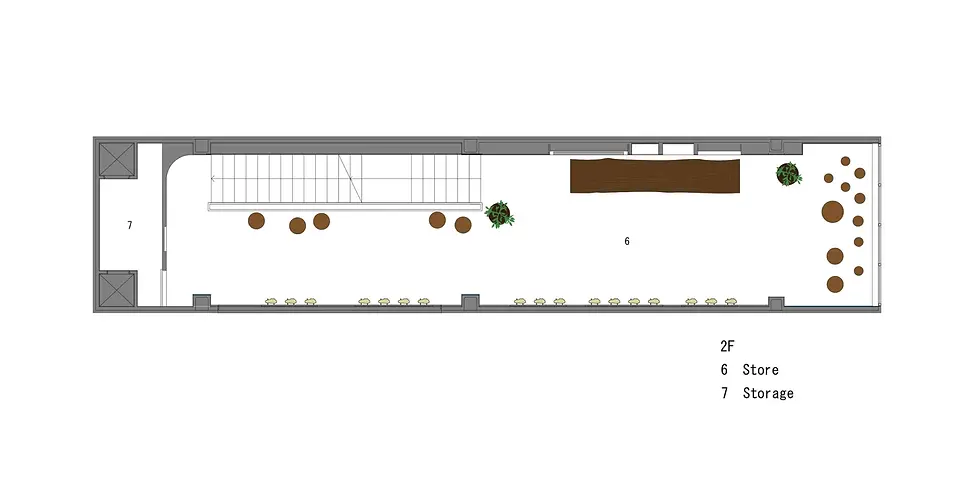
二层平面图显示楼梯、卖场陈列、木作坐凳与尽端镜面沿纵向动线展开。 The second-floor plan shows the stair, displays, timber seating and mirrored end wall arranged along the longitudinal route. © TORAFU ARCHITECTS
从北侧道路望向店铺,通高玻璃在密集商业街景中展示两层连续的零售空间。 Seen from across the northern street, full-height glazing reveals the two retail floors as a continuous interior within the dense shopping district. © 阿野太一
Theodore Roosevelt Presidential Library
Snøhetta
8919 m²
Medora, United States
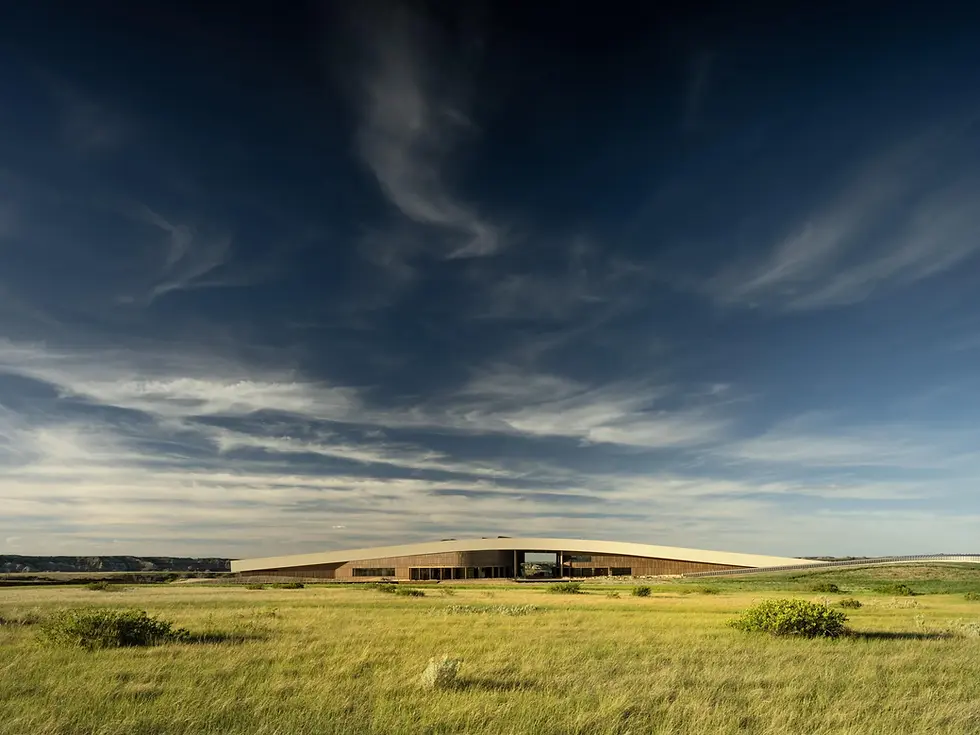
从草原远望图书馆,低伏屋顶沿台地水平展开,建筑轮廓几乎消失在北达科他荒地的地平线上。 Seen across the prairie, the library’s low roof follows the butte and nearly disappears into the horizon of the North Dakota Badlands. © Nic Lehoux

从场地眺望周边荒地,沟壑、草坡与远方台地构成图书馆试图持续框取和修复的自然背景。 The view from the site takes in ravines, grass slopes and distant buttes, the living landscape the library seeks to frame and restore. © Nic Lehoux
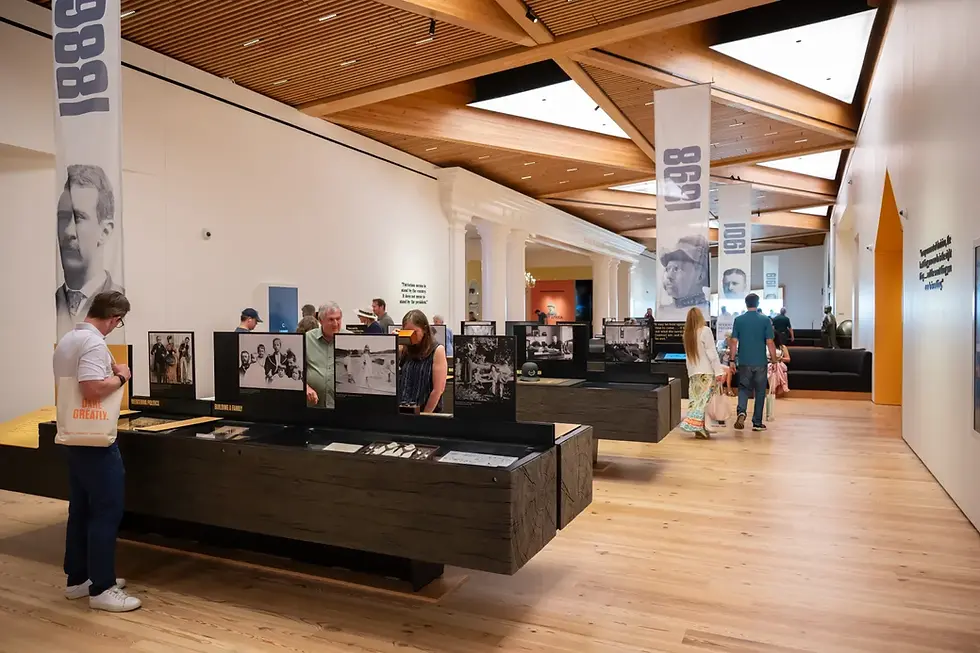
年轻时代展厅以木屋顶、天窗和中央展柜连接人物叙事与建筑的连续室内语言。 The young-adulthood gallery links biographical storytelling to the building’s continuous interior language of timber roof, skylights and central cases. © Theodore Roosevelt Presidential Library
从草原远望图书馆,低伏屋顶沿台地水平展开,建筑轮廓几乎消失在北达科他荒地的地平线上。 Seen across the prairie, the library’s low roof follows the butte and nearly disappears into the horizon of the North Dakota Badlands. © Nic Lehoux
NYMA Water Tower
Eek en Dekkers
800 m²
Nijmegen, The Netherlands

水塔从河岸草地与野花之后升起,保留的混凝土骨架、顶部砖环和NYMA字样共同维持旧厂区的城市标记。 Rising beyond riverside grass and wildflowers, the retained concrete frame, brick crown and NYMA lettering preserve the tower's identity within the former factory grounds. © Jannie Guo

从旧厂区入口望向水塔,竖向玻璃切口与外置钢梯成为历史塔身上最清晰的新介入。 Seen on arrival through the former factory grounds, the vertical glazed incision and detached steel stair register as the clearest new additions to the historic tower. © Jannie Guo

剖面图呈现垂直玻璃切口、层叠公共空间、顶部挑空与外置钢梯之间的立体关系。 The section explains the spatial relationship between the vertical glazed incision, stacked public rooms, upper void and external steel stair. © Eek en Dekkers
水塔从河岸草地与野花之后升起,保留的混凝土骨架、顶部砖环和NYMA字样共同维持旧厂区的城市标记。 Rising beyond riverside grass and wildflowers, the retained concrete frame, brick crown and NYMA lettering preserve the tower's identity within the former factory grounds. © Jannie Guo
C+C House
Studio Maignan Architects
353 m²
Toronto, Canada

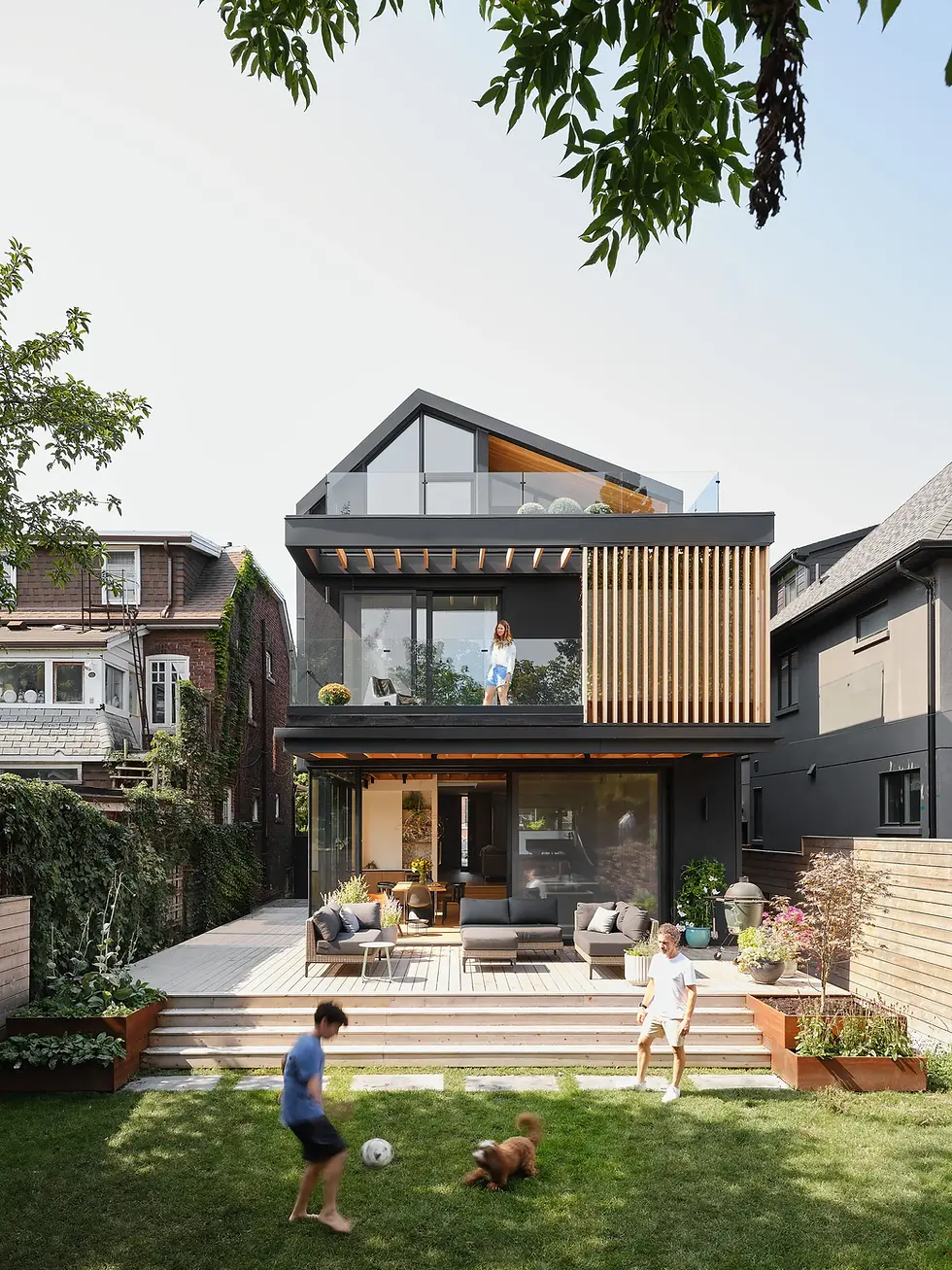

Curtain House
Johnsen Schmaling Architects
307.14 m²
Milwaukee, United States


Glade House
Ming Architects
900 m²
Singapore

住宅面向宽阔街道展开,石灰岩基座、白色挑檐与黑色滑动屏风共同构成层叠而克制的整体立面。 The house addresses its broad street frontage through a layered composition of limestone base, white overhangs and black sliding screens. © Studio Periphery

从泳池花园远望L形住宅,两翼环抱水面与草地,成熟树冠成为家庭空间的绿色边界。 Seen across the pool garden, the L-shaped house cradles water and lawn while mature tree canopies form a green perimeter. © Studio Periphery

首层平面图显示L形体量、沿街缓冲翼、祖母套房、公共起居区以及25 m泳池和花园之间的关系。 The first-floor plan shows the L-shaped massing, street buffer, grandmother's suite, shared living spaces and the relationship between the 25 m pool and garden. © Ming Architects
住宅面向宽阔街道展开,石灰岩基座、白色挑檐与黑色滑动屏风共同构成层叠而克制的整体立面。 The house addresses its broad street frontage through a layered composition of limestone base, white overhangs and black sliding screens. © Studio Periphery
Pet Hotel & Salon One²
miCo.
88.42 m²
Komae, Japan


Art Museum of AHUA
TJAD + DCA
9314 ㎡
Hefei, China


Casa Co
Aagnes studio + JDEstudio
1600 m²
Guadalajara, Mexico


Cerdeiras House Hotel
Tiago do Vale Arquitectos
902 ㎡
Labruja, Portugal


Sallarès Deu
JAAS Julià Arquitectes Associats
8294 m²
萨瓦德尔,西班牙

旧厂的砖砌入口与新设金属门并立,透出院内更新后的屋面。 An old brick entrance meets a new metal gate, with the renewed roofs visible beyond. © Adrià Goula
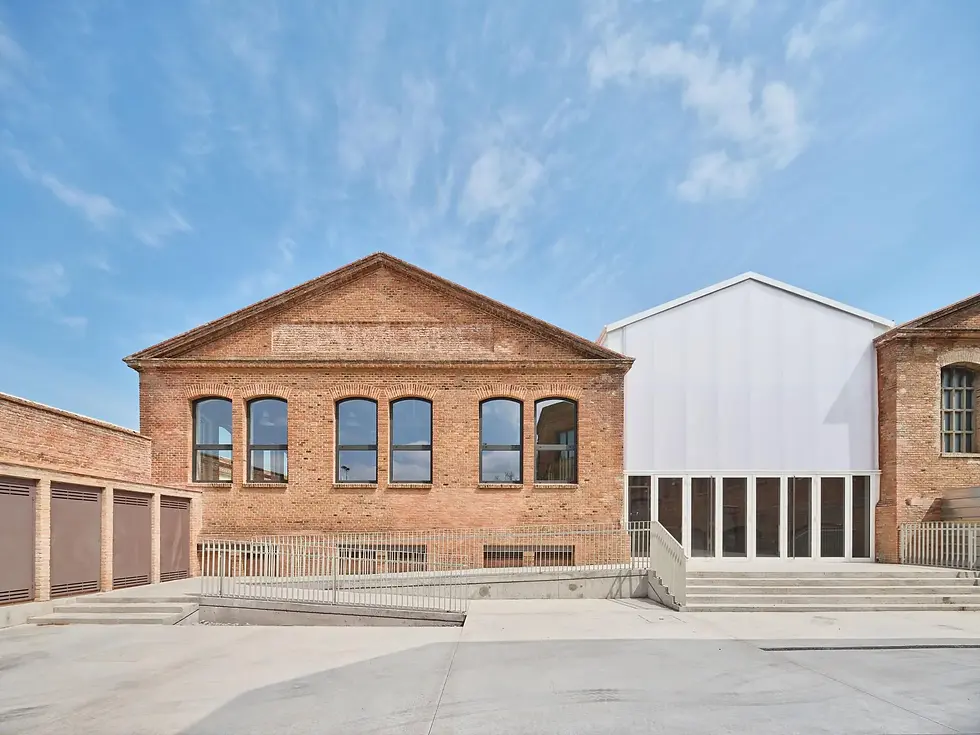
旧砖厂房与白色新增体量围合室外院落,保留工业建筑原有的纵深。 Brick factory halls and a white addition frame the open yard, preserving the depth of the industrial ensemble. © Adrià Goula

另一张环境剖面说明屋盖开启与通风如何帮助温暖季节散热。 A companion section diagrams opening and ventilation during warmer weather. © JAAS Julià Arquitectes Associats
旧厂的砖砌入口与新设金属门并立,透出院内更新后的屋面。 An old brick entrance meets a new metal gate, with the renewed roofs visible beyond. © Adrià Goula
Clunia Visitor Center
Tejedor Linares Arquitectos
1325 m²
Peñalba de Castro, Spain
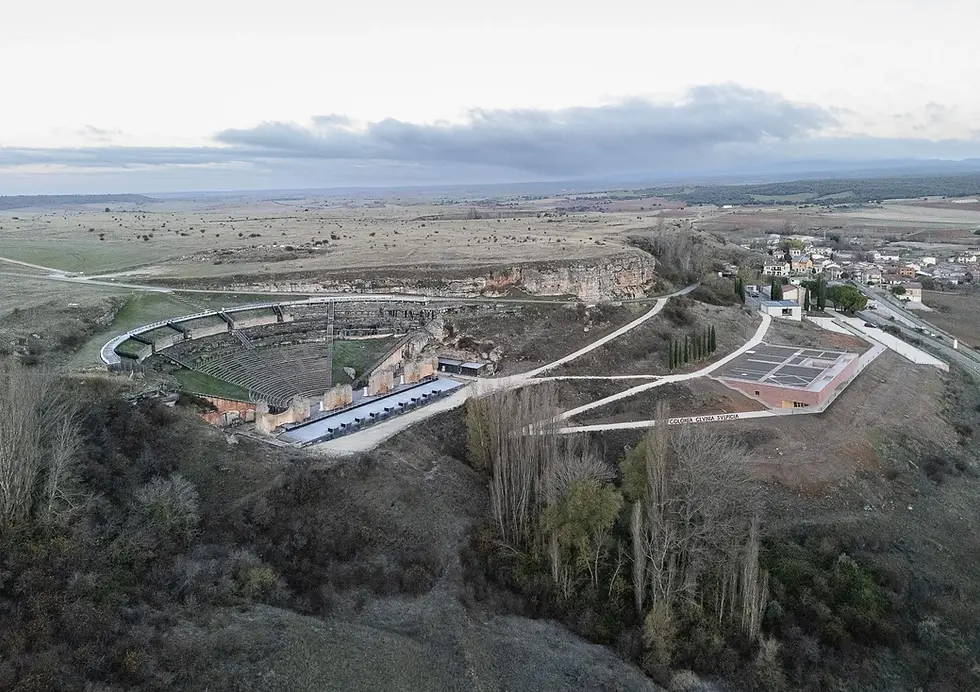
航拍呈现游客中心、罗马剧场与高原遗址之间的整体地形关系。 An aerial view establishes the topographic relationship between the visitor center, Roman Theatre and plateau ruins. © Fernando Alda
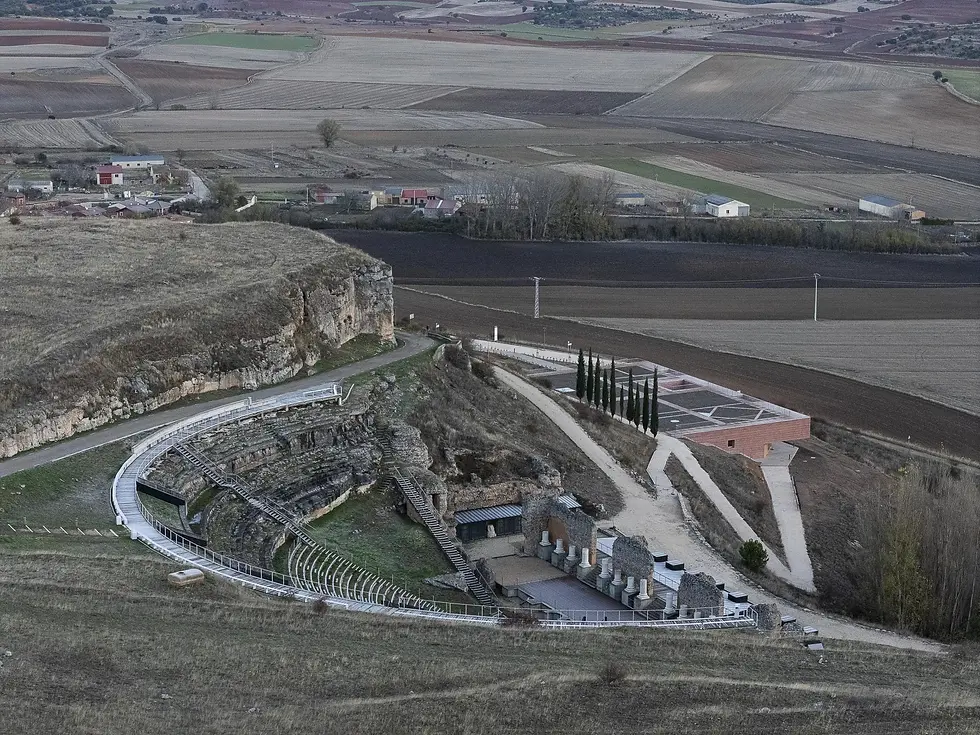
游客中心位于罗马剧场下方,缓坡路径把抵达建筑与进入古城连成同一段行程。 The center sits below the Roman Theatre, with a gentle route joining arrival to the ascent into the ancient city. © Fernando Alda

景观剖面显示建筑嵌入坡地并承接通往高原遗址的上升路径。 The landscape section shows the building embedded in the slope and carrying the ascent toward the plateau ruins. © Tejedor Linares Arquitectos
航拍呈现游客中心、罗马剧场与高原遗址之间的整体地形关系。 An aerial view establishes the topographic relationship between the visitor center, Roman Theatre and plateau ruins. © Fernando Alda
Pattani Fishermen Community Hub
HAS design and research
148 m²
Pattani, Thailand

俯瞰北大年河岸,折线形竹构沿钢平台展开,为渔船靠泊与公共活动留出连续边缘。 From above the Pattani waterfront, the folded bamboo frame extends along a steel deck with a continuous edge for boats and public life. © Rungkit Charoenwat

北大年河穿过城市,社区中心位于桥梁与传统河岸聚落之间,成为城市重新接近水面的节点。 The Pattani River crosses the city, with the hub between the bridge and working waterfront as a new point of contact with the water. © Rungkit Charoenwat

横剖面将竹构外壳、公共平台、水洞与水下石块组织为共同的人与生态界面。 The cross section combines bamboo enclosure, public deck, water opening and submerged stones as a shared human and ecological interface. © HAS design and research
俯瞰北大年河岸,折线形竹构沿钢平台展开,为渔船靠泊与公共活动留出连续边缘。 From above the Pattani waterfront, the folded bamboo frame extends along a steel deck with a continuous edge for boats and public life. © Rungkit Charoenwat
Gazebo House
yate + Maeda Koumuten
85.61 m²
Yugawara, Japan

从东南侧看望楼之家,朝海的开口在木构檐下展开。 Seen from the southeast, the house opens toward the sea beneath its timber eaves. © Tomoyuki Kusunose

东北侧外观呈现倾斜屋顶与首层窗带的关系。 The northeast view shows the sloping roof above the ground-floor windows. © Tomoyuki Kusunose

剖面图呈现两层空间、抬升屋顶与坡地之间的关系。 The section relates the two floors and rising roof to the sloping site. © yate+前田工務店
从东南侧看望楼之家,朝海的开口在木构檐下展开。 Seen from the southeast, the house opens toward the sea beneath its timber eaves. © Tomoyuki Kusunose
30 Grosvenor Square
David Chipperfield Architects
48000 m²
London, United Kingdom

从格罗夫纳广场望向改造后的建筑,修复立面、连续柱廊与开放首层重新建立面向公共花园的正立面。 Seen from Grosvenor Square, the restored facade, continuous colonnade and active ground floor renew the building's civic frontage. © Simon Menges

沿广场街道接近建筑,历史石材立面与重新开放的步行空间共同延伸梅费尔的城市轴线。 Approaching along the square, the historic stone facade and reopened pedestrian realm extend Mayfair's urban axis. © Simon Menges

退台顶层平面将主要套房和公共设施置于屋顶亭阁内,并释放面向广场和海德公园方向的露台。 The set-back top floor places principal suites and shared facilities within a rooftop pavilion, opening terraces toward the square and Hyde Park. © David Chipperfield Architects
从格罗夫纳广场望向改造后的建筑,修复立面、连续柱廊与开放首层重新建立面向公共花园的正立面。 Seen from Grosvenor Square, the restored facade, continuous colonnade and active ground floor renew the building's civic frontage. © Simon Menges
AutoCamp Sequoia
Waechter Architecture
724.64 m²
Three Rivers, United States

游客中心的雪松立面围合入口庭院,宽大门洞将抵达路径直接引向树荫下的公共空间。 The cedar-clad clubhouse frames the entry court, where a broad opening draws the arrival route directly into communal space beneath the trees. © Matt Kisiday

低矮游客中心沿成熟橡树展开,连续水平屋顶在山坡与营地之间建立清晰方向。 The low clubhouse extends beneath mature oaks, its continuous horizontal roof establishing orientation between campground and foothills. © Matt Kisiday

游客中心平面图以四个封闭服务体量支撑大屋顶,并在其间释放休息厅、酒吧、零售和通行空间。 The clubhouse plan places four enclosed service volumes beneath a broad roof, freeing lounge, bar, retail and circulation between them. © Waechter Architecture
游客中心的雪松立面围合入口庭院,宽大门洞将抵达路径直接引向树荫下的公共空间。 The cedar-clad clubhouse frames the entry court, where a broad opening draws the arrival route directly into communal space beneath the trees. © Matt Kisiday
Split Mass Residence
K-Thengono Design Studio
712 m²
South Tangerang, Indonesia

鸟瞰住宅,层层绿化屋面、屋顶泳池与木构凉亭共同组成一片可被使用的第五立面。 An aerial view brings together the planted roofs, rooftop pool and timber pavilion as an inhabitable fifth facade. © Mario Wibowo

从另一侧俯瞰,泳池、坡道与草坡沿建筑上部连续展开,将屋顶转化为家庭活动的立体花园。 Seen from the opposite side, the pool, ramp and planted slopes extend across the upper levels as a three-dimensional family garden. © Mario Wibowo

屋顶平面图整合泳池、凉亭、瑜伽平台与绿化屋面,完成从室内向天空延伸的活动序列。 The rooftop plan brings together the pool, pavilion, yoga terrace and planted roof, completing the sequence from interior rooms to the sky. © K-Thengono Design Studio
鸟瞰住宅,层层绿化屋面、屋顶泳池与木构凉亭共同组成一片可被使用的第五立面。 An aerial view brings together the planted roofs, rooftop pool and timber pavilion as an inhabitable fifth facade. © Mario Wibowo
Caminito del Rey Visitor Reception Center
Luis Machuca Arquitectos
550 m²
Ardales, Spain
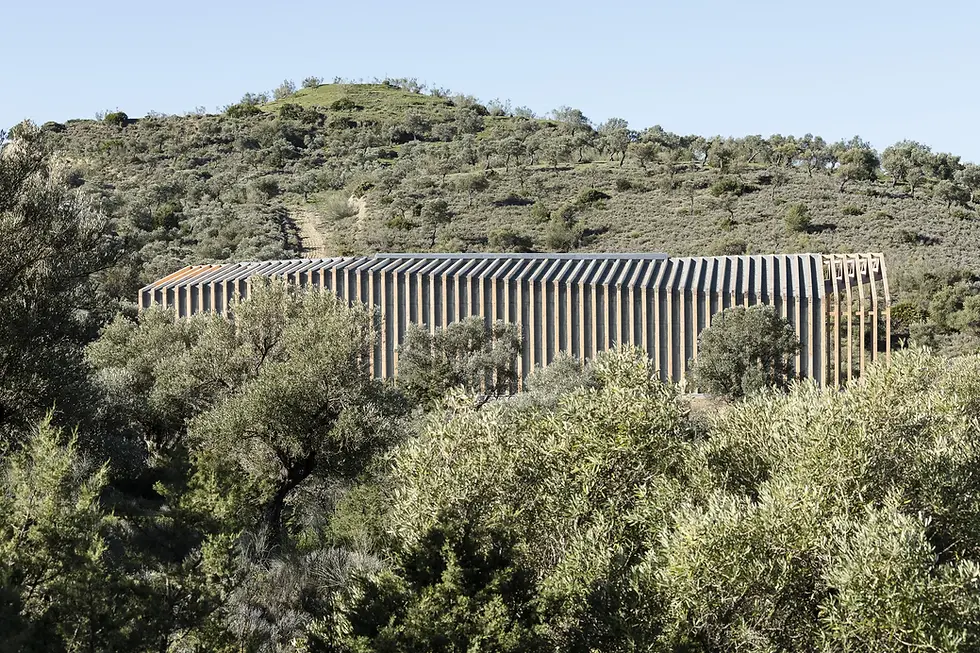
游客接待中心低伏于瓜达尔奥尔塞水库上方的灌木坡地,连续木构轮廓顺应自然保护区边缘的地形。 The visitor centre sits low in the scrubland above the Guadalhorce Reservoir, its continuous timber profile following the terrain at the edge of the protected landscape. © Fernando Alda

从坡地远望,建筑以狭长而轻盈的木构体量嵌入景观,没有遮断水库与远山的连续视野。 Seen from the hillside, the long, lightweight timber volume settles into the landscape without interrupting the wider view of reservoir and mountains. © Fernando Alda

横剖面显示胶合木门架的折线几何、围护层次与室内净高,结构轮廓在此成为最直接的空间表达。 The transverse section shows the folded geometry of the glulam portal, the envelope build-up and interior height, making structure the clearest expression of space. © Luis Machuca Arquitectos
游客接待中心低伏于瓜达尔奥尔塞水库上方的灌木坡地,连续木构轮廓顺应自然保护区边缘的地形。 The visitor centre sits low in the scrubland above the Guadalhorce Reservoir, its continuous timber profile following the terrain at the edge of the protected landscape. © Fernando Alda
HAMANOYU EDOYU
Kubo Tsushima Architects
1592.55 m²
Tokyo, Japan

东南侧外观突出低层立面的缓弧柱面与竖向灯带,久保都岛以柔和起伏减轻混凝土框架对街道的压迫。 The southeast elevation foregrounds gently swelling lower columns and vertical lighting, softening the concrete frame along the street. © 小野寺宗贵摄影事务所 / © Munetaka Onodera Photography Office

从东南侧街道观看iiyu HAMACHO全貌,十层住宅体量落在向社区开放的浴场与咖啡空间之上。 The full southeast elevation of iiyu HAMACHO shows ten residential levels rising above the bathhouse and street-facing cafe. © 小野寺宗贵摄影事务所 / © Munetaka Onodera Photography Office

女浴半露天浴池矩计图详示双层屋面与天花、顶部开口、围护及浴池之间的构造关系。 The sectional detail through the women's semi-open-air bath documents the layered roof and ceiling, overhead opening, enclosure and pool construction. © 久保都岛建筑设计事务所 / © Kubo Tsushima Architects
东南侧外观突出低层立面的缓弧柱面与竖向灯带,久保都岛以柔和起伏减轻混凝土框架对街道的压迫。 The southeast elevation foregrounds gently swelling lower columns and vertical lighting, softening the concrete frame along the street. © 小野寺宗贵摄影事务所 / © Munetaka Onodera Photography Office
House in Oiso
ISO architects & associates
98.33 m²
Oiso, Japan

从客厅看向厨房,登梁沿屋面抬升,为横向展开的公共空间带来温和节奏。 Looking from living toward the kitchen, rising beams follow the roof and give the broad communal room a gentle rhythm. © Tomomasa Kusunose

从东南侧看大磯之家,低伏的黑色木构体量沿街展开,坡屋顶在树木与天空之间保持克制的轮廓。 Seen from the southeast, the low dark timber volume extends along the street, its pitched roof held quietly between trees and sky. © Tomomasa Kusunose

纵向剖面呈现住宅贴近地面展开的尺度,以及室内、缘侧和庭院之间的连续关系。 The longitudinal section shows the house remaining close to the ground and the continuity between rooms, engawa and courtyard. © ISO architects & associates
从客厅看向厨房,登梁沿屋面抬升,为横向展开的公共空间带来温和节奏。 Looking from living toward the kitchen, rising beams follow the roof and give the broad communal room a gentle rhythm. © Tomomasa Kusunose
Holiday House in Rågeleje
Jesper Kusk Arkitekter
158 m²
Rågeleje, Denmark
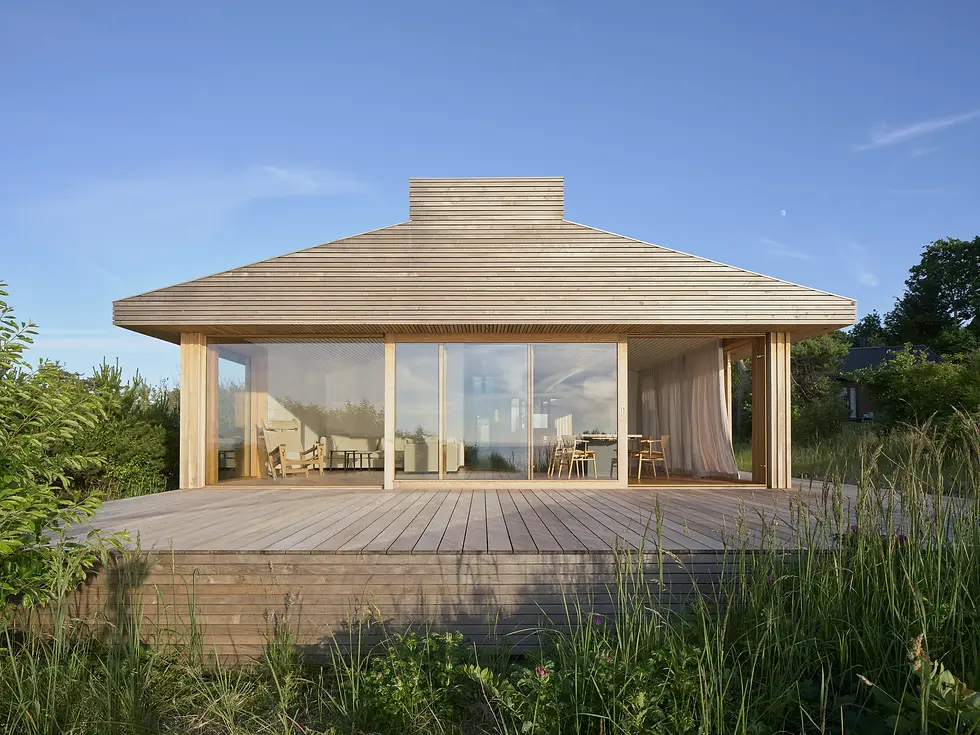
北向海景立面以连续玻璃打开起居空间,宽阔木平台延伸至滨海草地。 The sea-facing north elevation opens the living room through continuous glazing, with a broad timber deck reaching into the coastal grass. © Hampus Berndtson

傍晚光线下,低伏屋面与透明起居空间在草地边缘形成清晰的海岸轮廓。 In the evening light, the low roof and transparent living room form a calm coastal silhouette at the edge of the grass. © Hampus Berndtson

檐口节点展示屋面板条、保温层、木结构与排水边缘的构造关系。 The eaves detail sets out the relationship between roof boards, insulation, timber structure and the drainage edge. © Jesper Kusk Arkitekter
北向海景立面以连续玻璃打开起居空间,宽阔木平台延伸至滨海草地。 The sea-facing north elevation opens the living room through continuous glazing, with a broad timber deck reaching into the coastal grass. © Hampus Berndtson
Torinago
ninkipen!
390.71 m²
Kyoto, Japan

外观,从东北侧看;瓦片大屋顶与烧杉外墙构成建筑面向城下町的第一印象。 Exterior, viewed from the northeast; the tiled roof and charred-timber walls establish the building’s first impression toward the castle town. © Hiroki Kawata

外观,从东侧道路看;建筑以大屋顶和深色外墙回应传统街景。 Exterior, viewed from the east road; the building responds to the historic streetscape through its large roof and dark walls. © Hiroki Kawata

屋顶平面图;图纸呈现大屋顶、侧向露台和建筑整体轮廓。 Roof plan; the drawing shows the large roof, lateral terraces and the overall building outline. © ninkipen!
外观,从东北侧看;瓦片大屋顶与烧杉外墙构成建筑面向城下町的第一印象。 Exterior, viewed from the northeast; the tiled roof and charred-timber walls establish the building’s first impression toward the castle town. © Hiroki Kawata
Fonds Bustamante
Charles Zana
650 m²
Arles, France

旧圣十字教堂面向拉罗凯特街区安静展开,修复后的浅色立面保留原有轮廓,并以黄色竖向细节标记基金会的新身份。 The former Église Sainte-Croix meets the La Roquette neighbourhood with a restrained pale facade, while a vertical yellow detail signals its new life as an art foundation. © Fonds Bustamante

从阿尔勒街角观看,历史教堂的山墙、石墙与周边树木共同维持街区尺度,新的文化用途没有改变其城市轮廓。 Seen from an Arles street corner, the church gable, masonry and surrounding trees retain the scale of the neighbourhood without advertising the new cultural use through a dramatic silhouette. © Hervé Hôte adagp

地面作品与混凝土表面的接缝共同构成观看场景,呈现基金会强调作品、材料和空间相互回应的策展脉络。 Floor-based works and concrete joints share the visual field, illustrating the foundation’s curatorial interest in reciprocal relationships between art, material and space. © Fonds Bustamante
旧圣十字教堂面向拉罗凯特街区安静展开,修复后的浅色立面保留原有轮廓,并以黄色竖向细节标记基金会的新身份。 The former Église Sainte-Croix meets the La Roquette neighbourhood with a restrained pale facade, while a vertical yellow detail signals its new life as an art foundation. © Fonds Bustamante
Zannier Île de Bendor
Hardel Le Bihan Architectes
13500 m²
Île de Bendor, France

航拍展示约7公顷岛屿的整体格局,建筑集中于港湾一侧,步行路径沿海岸与植被串联各个片区。 The aerial view shows the seven-hectare island as a whole, with buildings gathered around the harbour and pedestrian paths linking the coast and planted areas. © Zannier Hotels
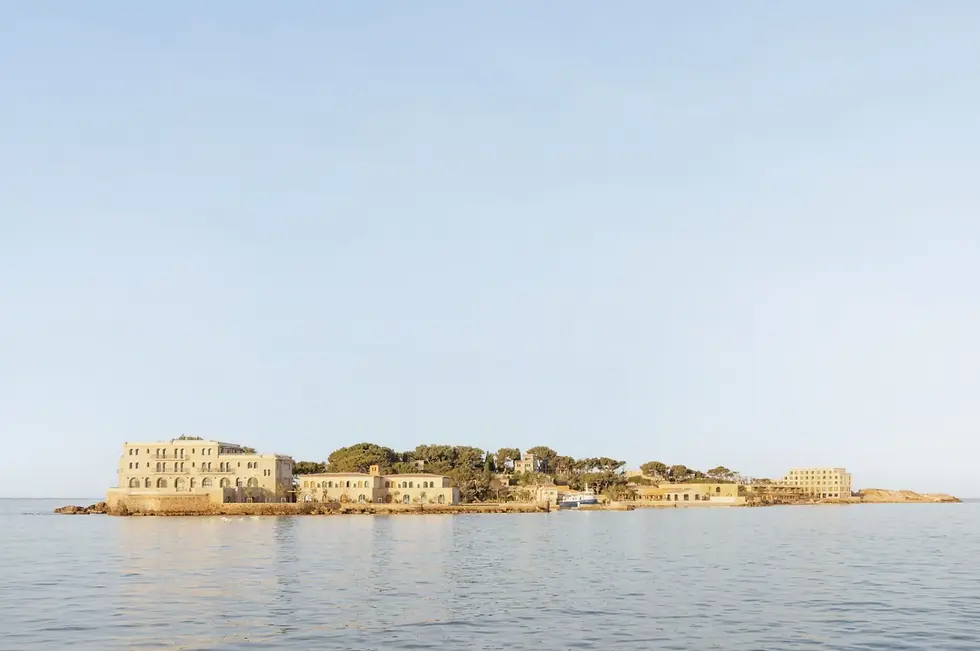
从海上望向更新后的本多尔岛,白色建筑沿地形层层展开,港口、松林与低矮屋面共同保持地中海聚落的尺度。 Seen from the water, the renewed Île de Bendor rises as a layered white settlement, with harbour, pines and low rooflines preserving its Mediterranean scale. © Schnepp Renou

施工阶段暴露的墙体、楼板与管线记录了既有建筑被拆解、修复并重新整合的过程。 Exposed walls, slabs and services during construction record how the existing building was opened up, repaired and integrated anew. © Schnepp Renou
航拍展示约7公顷岛屿的整体格局,建筑集中于港湾一侧,步行路径沿海岸与植被串联各个片区。 The aerial view shows the seven-hectare island as a whole, with buildings gathered around the harbour and pedestrian paths linking the coast and planted areas. © Zannier Hotels
SONO House
Atelier Carle
214 m²
Wentworth-Nord, Canada

住宅沿草坡展开,深色铁杉柱列与林地共同形成水平延伸的山居轮廓。 The house stretches along the grassy slope, its dark hemlock colonnade extending the horizontal line of the woodland retreat. © Félix Michaud
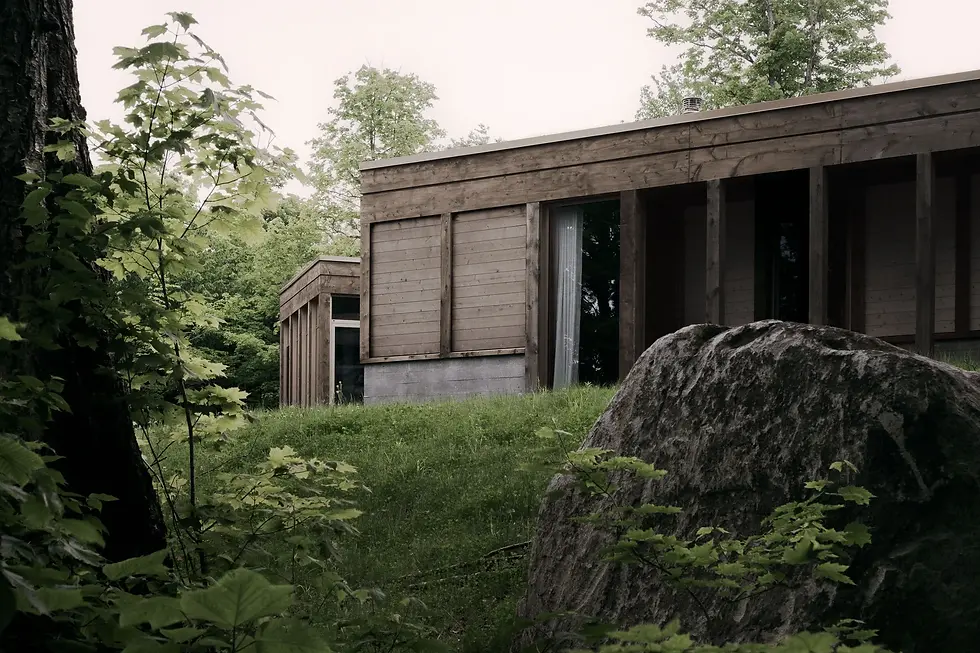
住宅低伏在岩石、草坡与成熟树木之间,水平屋顶保持对地形的克制回应。 Set behind rock, meadow and mature trees, the low roofline maintains a restrained presence within the terrain. © Félix Michaud

北立面图展开面向景观的木构柱列与玻璃界面,显示公共空间沿林缘连续布置。 The north elevation unfolds the timber colonnade and glazing toward the landscape, with shared rooms aligned along the forest edge. © Atelier Carle
住宅沿草坡展开,深色铁杉柱列与林地共同形成水平延伸的山居轮廓。 The house stretches along the grassy slope, its dark hemlock colonnade extending the horizontal line of the woodland retreat. © Félix Michaud
Blue Bottle Coffee Harajuku
TEKI Design
82.95 m²
Tokyo, Japan


Urban Revivo Sanlitun Flagship Store
MVRDV
4120 m²
Beijing, China


Urban Egg
U.GA Architects
454 m²
Busan, South Korea


Cathedral House
JAK Architecture
245 m²
Thornton, Australia


Nachan the Antique Courtyard Hotel
PAVA architects
1200 m²
Chiang Khan, Thailand

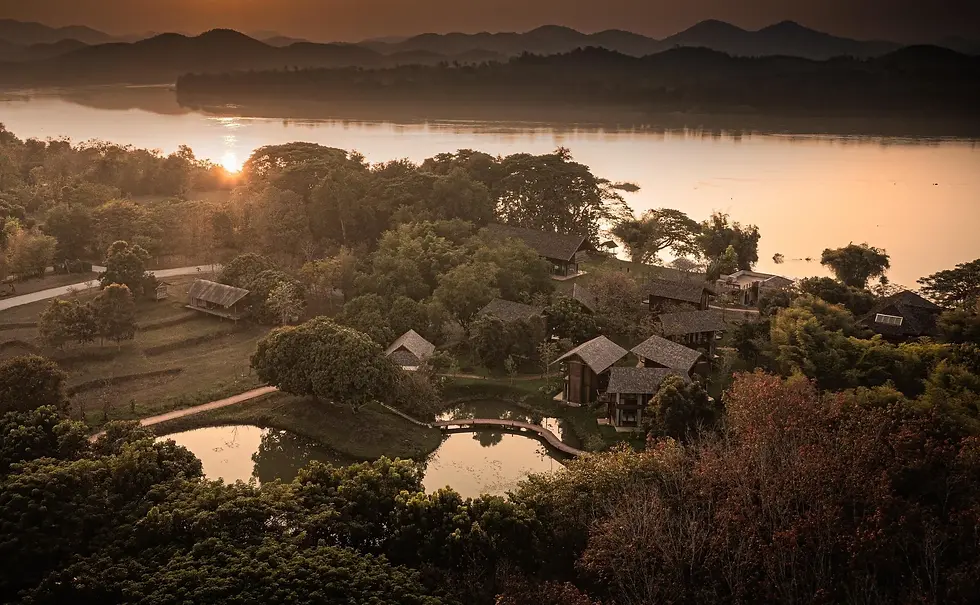

Yuiichimi Processing Facility and Shop
FUMIASO ARCHITECT & ASSOCIATES
15.11 ㎡
Nishinomiya, Japan


PERMA Serifos Retreat
MOLD Architects
270 ㎡
Serifos Island, Greece


Dymak HQ
BIG
2800 m²
Odense, Denmark

Exterior curved glass facade set in the landscape, showing the circular volume facing its natural surroundings.

Aerial dusk view of the circular headquarters, central courtyard, and photovoltaic roof.

Cross section showing the rising roof, courtyard, interior levels, and structural profile.
Exterior curved glass facade set in the landscape, showing the circular volume facing its natural surroundings.


TOP EVENT

IDS Vancouver 2026 Returns This September
SELECTED DESIGN TEAMS

Plano Humano Arquitectos
Plano Humano Arquitectos was founded in Lisbon in 2008 by architects Helena Vieira and Pedro Ferreira. Both founders were born in Lisbon and continue to lead the practice with project manager Vítor Sá and a wider team of architects and designers. Its work extends across Portugal and abroad, covering residential, cultural, religious, educational, commercial and community programmes.


HAS design and research
HAS design and research was founded by architects, artists and educators Jenchieh Hung and Kulthida Songkittipakdee, with studios in Bangkok and Shanghai. The name combines the founders' surnames while signalling a parallel commitment to design and research. The practice works across cultural buildings, religious spaces, installations, exhibitions and experimental architecture, drawing insight from informal construction, temporary markets and everyday infrastructure in Thailand, Southeast Asia and the wider Asian city.

De Matos Ryan
De Matos Ryan was founded in London in 1999 by architects Angus Morrogh-Ryan and José Esteves de Matos. Both studied at the University of Cambridge and spent time at Harvard Graduate School of Design. Morrogh-Ryan developed an early interest in theatres, education, arts and community projects, while Esteves de Matos has extensive experience with listed buildings, planning and the delivery of museums, hotels and schools.

ARCHITECTS OFFICE (AO)
ARCHITECTS OFFICE (AO) is an international architecture, urbanism and interior design practice led by Greg Bousquet and based in São Paulo, Brazil. The studio begins with investigation and listening, working across scales to explore new forms of coexistence between architecture, city and landscape.

studio anettai
studio anettai is a Ho Chi Minh City-based architecture and 3D visualisation practice founded by architect Takahito Yamada, with Nobuhiro Inudoh as partner architect. Its name comes from the Japanese word for 'subtropical', signalling the climate and cultural setting in which much of the office's work is grounded. Founded in 2019, the Japanese-Vietnamese team works across housing, hospitality, workplaces, lodging and adaptive reuse.

Waechter Architecture
Waechter Architecture is an interdisciplinary practice based in the Pacific Northwest and led by architect Ben Waechter in Portland, Oregon. Its portfolio spans housing, hospitality, wineries, commercial work, community projects and mixed-use development, with recognition including the Architectural League Emerging Voices programme and multiple AIA Oregon awards.

Wilmotte & Associés
Founded by French architect Jean-Michel Wilmotte in 1975, Wilmotte & Associés is headquartered in Nice and maintains a network of studios that includes Paris, Milan, Venice, Seoul and London. Its work spans architecture, urban design, interiors, museography and product design, with a long-standing focus on cultural buildings, hospitality, retail and the transformation of historic structures. Its cultural portfolio includes work at the Rijksmuseum in Amsterdam, spaces associated with the Louvre in Paris, and museums and galleries internationally.

PCA-STREAM
PCA-STREAM was founded in Paris in 2000 by architect Philippe Chiambaretta. The practice places architectural production alongside interdisciplinary research, using its STREAM platform to connect architecture and urbanism with art, social science and environmental inquiry. Its work spans offices, retail, cultural programmes and urban transformation.

Eek en Dekkers
Eek en Dekkers was founded in 2015 by designer Piet Hein Eek and architect Iggie Dekkers. Based in Eindhoven, the practice brings product, interior and architectural thinking into one working framework, with a particular focus on renovation, transformation and the adaptive reuse of existing buildings.

Atelier Carle
Atelier Carle is a Montreal-based architectural practice founded by Alain Carle, whose work spans more than three decades. In 2023 the studio entered a new phase through partnerships with long-standing collaborators. It is now led by Carle together with Abel Bravo Muñoz, Alexandre Lemoyne, Gabriel Ostiguy and Isaniel Lévesque, working across residential, commercial and interior projects.
